
The Magnesium Crisis: Why This Missing Mineral is Making You Sick
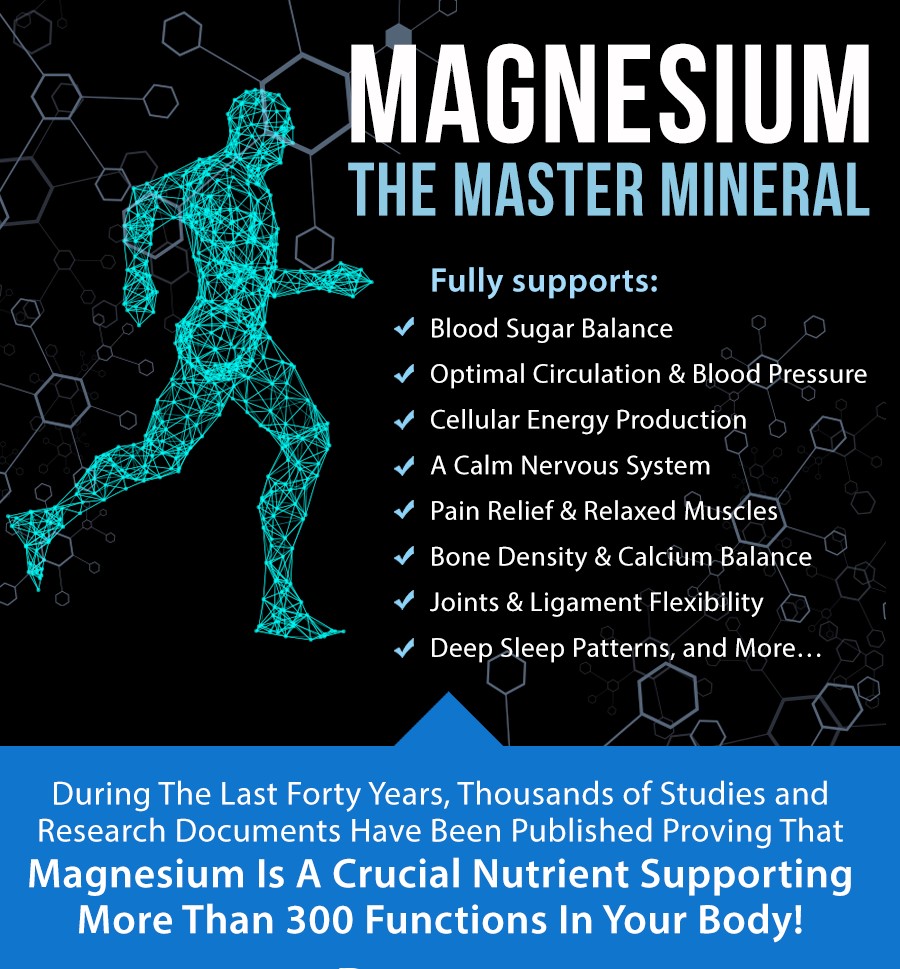
Feeling tired, anxious, or dealing with muscle cramps? You might be among the 50% of Americans deficient in magnesium—the master mineral that powers over 600 biochemical reactions in your body.
Modern farming, processed foods, and common medications have created a silent epidemic. But the solution isn’t as simple as taking any magnesium supplement. Most people are taking the wrong form—the one their bodies can’t even use.
This isn’t just another supplement article. This is a deep dive into the cellular machinery that keeps you alive, and the one mineral that acts as its master regulator.
What Does Magnesium Do For the Body? The Cellular Powerhouse Explained
Your Body’s Energy Currency Useless Without Mg
Think of Adenosine Triphosphate (ATP) as the universal battery that powers every cell. But there’s a critical secret: ATP is inherently unstable. Its negatively charged phosphate groups repel each other.
Magnesium is the stabilizer. It forms a crucial complex with ATP (Mg-ATP), which is the actual substrate that thousands of enzymes use. This means without magnesium, your cells cannot efficiently produce or utilize energy. A magnesium deficiency is, at its core, a state of cellular energy bankruptcy.
The Calcium Antagonist: Your Body’s Natural “Brake” System
Magnesium’s most critical role may be as a natural calcium blocker.
- Calcium is the “Gas Pedal”: It signals excitement, contraction, and firing
- Magnesium is the “Brake”: It blocks excessive calcium influx, promoting relaxation
The critical implication: A magnesium deficiency creates a state of functional calcium excess. Even with normal calcium levels, the lack of its natural antagonist leads to:
- Hypertension (unopposed vasoconstriction)
- Muscle Cramps (unopposed muscle contraction)
- Anxiety & Migraines (neuronal hyperexcitability)
Are You Magnesium Deficient? The Silent Epidemic
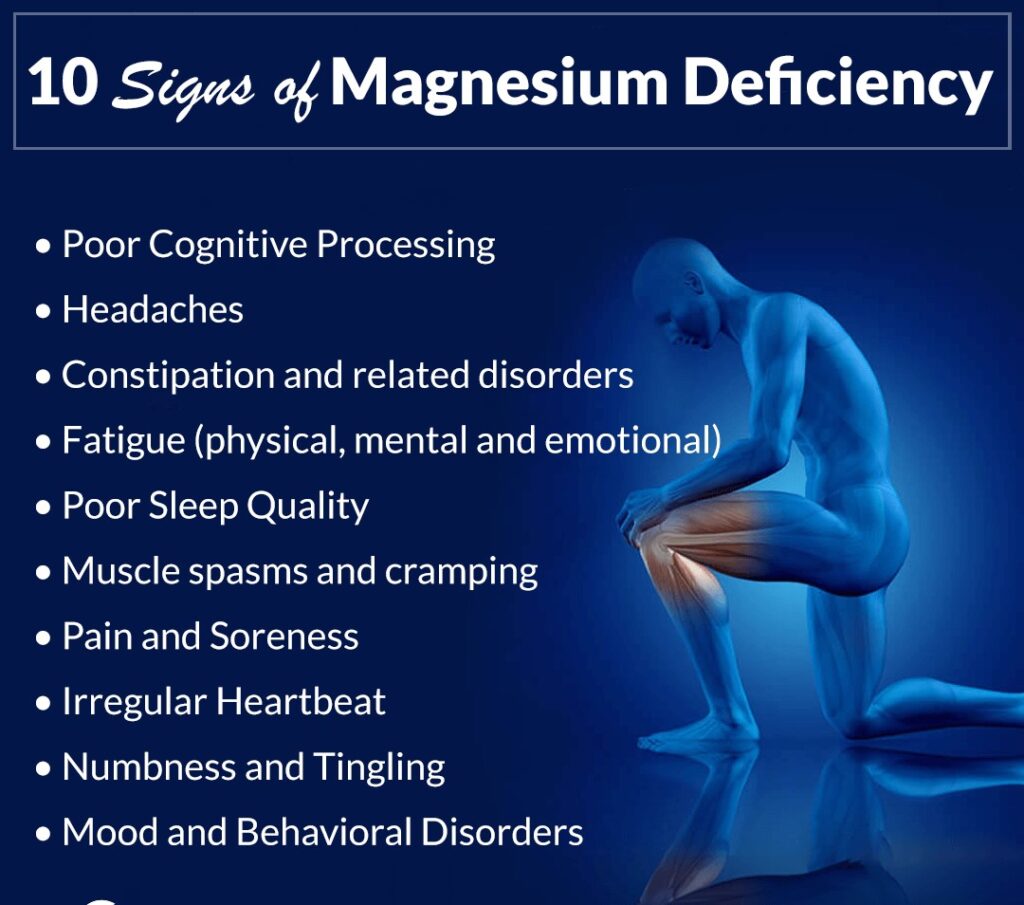
Why Your Blood Test is Lying to You
The standard serum magnesium test is notoriously unreliable. Here’s why:
- Only 1% of your body’s magnesium is in your blood
- The other 99% is in your bones (60%) and inside your cells (39%)
- Your body will ruthlessly defend that 1% blood level, leaching magnesium from your cells and bones
This means you can be severely deficient at a cellular level while your blood test comes back “perfectly normal.” A Red Blood Cell (RBC) Magnesium test is far more accurate.
Modern Life is Draining Your Magnesium

- Processed Foods: Refining grains strips away magnesium-rich germ and bran
- Soil Depletion: Modern farming may be depleting minerals from soil
- Medications: Proton Pump Inhibitors (PPIs for acid reflux) prevent absorption of many magnesium supplements
- Chronic Stress: Stress hormones increase magnesium excretion
What is Magnesium Good For? Science-Backed Benefits
Brain & Nervous System: Natural Calming Agent
Magnesium’s role as an NMDA receptor blocker makes it a powerful neurological stabilizer.
Anxiety & Depression: A 2017 randomized clinical trial found that 248 mg of magnesium daily led to significant improvement in depression and anxiety scores, with effects seen in two weeks.
Migraine Prevention: By stabilizing neuronal firing, magnesium is well-established for migraine prophylaxis.
The Alzheimer’s Breakthrough: MIT researchers gave magnesium L-threonate to Alzheimer’s-model mice. Results: 100% improvement in long-term memory and reversal of synapse loss. It literally grew new brain connections.
Magnesium for Sleep: Which Form Works Best?
This is where form matters tremendously. For sleep, you want magnesium that crosses the blood-brain barrier.
Best for Sleep: Magnesium Glycinate or L-Threonate
Why: Glycinate provides glycine (calming), while L-threonate specifically increases brain magnesium levels
Timing: 30-60 minutes before bed
A study showed magnesium supplementation improved sleep quality in older adults with insomnia, particularly by enhancing slow-wave sleep.
Metabolic Health & Diabetes Prevention
Magnesium is a cornerstone of insulin sensitivity. The insulin receptor is a magnesium-dependent enzyme. Without enough Mg, the signal for your cells to absorb glucose becomes “sluggish.”
A massive meta-analysis of over 1 million people found that each 100 mg per day increase in magnesium intake was associated with a 19% reduced risk of diabetes.
Cardiovascular Protection: Your Heart’s Best Friend
By acting as a natural calcium channel blocker, magnesium:
- Lowers Blood Pressure by relaxing blood vessels
- Prevents Arrhythmias by stabilizing heart electrical activity
- Reduces Heart Failure & Stroke Risk: 100 mg/day increase in Mg intake led to 22% lower heart failure and 7% lower stroke risk
DNA Protection: Your Genetic Armor
Researchers exposed cells to toxic heavy metals like nickel and cadmium. Result? Magnesium COMPLETELY PREVENTED DNA damage. The mechanism: magnesium competitively binds to your DNA, physically blocking toxic metals from latching on and shredding your genetic material.
What is the Best Magnesium Supplement? The Critical Form Comparison
This is where most people get it wrong. The form determines everything—absorption, benefits, and side effects.
| Form | Elemental Mg | Bioavailability | Best For | Laxative Effect |
|---|---|---|---|---|
| Magnesium Oxide | ~60% | Very Low (~4%) | Avoid for supplementation | High |
| Magnesium Citrate | ~16% | Moderate | General use, constipation | Moderate |
| Magnesium Glycinate | ~10-14% | Very High | Sleep, anxiety, deficiency | Very Low |
| Magnesium L-Threonate | ~8% | High (in brain) | Cognitive function, memory | Very Low |
| Magnesium Taurate | ~9% | High | Cardiovascular health | Very Low |
The Magnesium Glycinate Advantage
Why it’s the gold standard:
- Superior absorption via amino acid transporters (bypasses saturated mineral pathways)
- Zero laxative effect – most magnesium is absorbed, not left in gut
- Glycine carrier provides additional calming benefits
- Works even with low stomach acid (important for PPI users)
Critical detail: Most “magnesium glycinate” isn’t truly chelated. Companies often mix cheap magnesium oxide with glycine powder. True chelation, where the mineral is bound to the amino acid, is what allows for superior absorption.
The NeoLife Magnesium Complex Difference
In a market flooded with cheap oxides and falsely labeled products, NeoLife Magnesium Complex is formulated to the highest standard of efficacy and bioavailability.
1. The Tri-Mag Blend: Superior, Research-Backed Forms
NeoLife doesn’t cut corners. Our complex provides 150 mg of elemental magnesium from a blend of:
- Magnesium Glycinate: A highly bioavailable, chelated form that’s gentle on the stomach
- Tri-Magnesium Citrate: A well-absorbed organic salt
- Magnesium Oxide: Included for its high elemental content, but its effect is balanced by better-absorbed forms
2. The PhytoMag Blend: The “Nutrient Team” Approach
Remember, in nature, nutrients never work alone. NeoLife includes a proprietary blend of whole-food concentrates from Beetroot, Kale, Broccoli, and Radish—providing complementary phytonutrients and natural dietary magnesium.

3. 3D Technology for Maximum Absorption
Our exclusive 3D Technology ensures tablets rapidly Disintegrate, Dissolve, and Disperse in the gut, guaranteeing the magnesium is released and available for absorption.
How to Take Magnesium: Dosage, Timing & Safety
How Much Magnesium Should I Take Daily?
- RDA: 400-420 mg/day (men), 310-320 mg/day (women)
- Upper Limit: 350 mg from supplements (primarily a laxative threshold, not toxicity)
- Strategy: Start with 200 mg daily, increase gradually
- Timing: Split doses (morning/evening) for better absorption
Does Magnesium Make You Poop? (Side Effects Explained)
Yes, but it depends entirely on the form. Magnesium oxide acts as a powerful laxative because it’s poorly absorbed. However, magnesium glycinate rarely causes diarrhea due to its superior absorption.
Can You Take Too Much Magnesium?
The Tolerable Upper Limit (350mg from supplements) is primarily a laxative threshold, not a toxicity limit. With highly bioavailable forms like glycinate, you can often take higher doses without GI issues.
Conclusion: Make Magnesium a Non-Negotiable Priority
Magnesium is not an optional “wellness” supplement. It is a foundational mineral without which your cellular machinery cannot function. From powering your energy and calming your mind to protecting your heart and even your very DNA, its role is unparalleled.
Correcting a magnesium deficiency isn’t “boosting” your system—it’s removing a brake that’s crippling enzymatic processes across every system in your body.
Ready to experience the difference that truly bioavailable, whole-food based magnesium can make?
But don’t just take our word for it. Here’s what those who have made the switch are saying:



👉 Explore NeoLife Magnesium Complex – where pharmaceutical-grade science delivers nature’s master mineral.
💡 Want More Science-Backed Health Intelligence?
If you found this evidence-based breakdown valuable, there’s more where that came from.
Join the Wellness Intelligence Hub — our private community where we break down complex science into actionable intelligence.
Inside, you’ll get:
- Exclusive deep-dives on clinical studies
- “Ask Me Anything” sessions with health experts
- A community focused on evidence over marketing hype
👇 Take control of your health intelligence today:
🔗 Join the Wellness Intelligence Hub
🔗 Further Reading: Keep Learning
- Understanding the Essential Role of Minerals in Nutrition
- What Vitamins Should I Take? An Evidence-Based Guide to Cutting Through the Confusion
- The Sunshine Vitamin: What is the Best Vitamin D Supplement? A Science-Backed Guide.
References:
- Tarleton, E.K., et al. (2017). Role of magnesium supplementation in the treatment of depression. PLoS One.
- Fang, X., et al. (2016). Dietary magnesium intake and the risk of cardiovascular disease, type 2 diabetes, and all-cause mortality. BMC Medicine.
- Liu, G., et al. (2015). Efficacy of Magnesium L-Threonate in an Alzheimer’s Disease Model.
- Zhang, C., et al. (2022). Effects of Magnesium L-Threonate on Memory in Healthy Adults.
- DiNicolantonio, J.J., et al. (2018). Subclinical magnesium deficiency: a principal driver of cardiovascular disease and a public health crisis.

Pingback: Best Magnesium Supplement for Women: An Evidence-Based Guide