

If you’re focused on optimal health, you’ve heard the advice: eat more protein. We associate it with muscle, performance, and body shape. But its role is far more profound.
Protein is the master building block of human life. It provides the structure for your muscles, skin, hair, and even the membranes of your cells. In fact, an incredible 42% of the dry weight of our body is protein. Beyond structure, proteins function as the enzymes that digest your food and the hormones that regulate your body.
With so many benefits, the single most common question is: how much protein do I need?
The answer is complex. The 0.8 grams/kg you see on a food label is a bare minimum for a sedentary person, but this number changes dramatically based on your age, activity level, and health goals [1, 2, 4]. This guide will break down the science of protein, help you calculate your true needs, and explain how to use it as a powerful tool for weight management and healthy aging.
🔬 The Science: What is Protein? The Body’s Master Building Block
Think of protein as a complex “house.” That house is built from individual “bricks” called amino acids [5]. How you build the house matters, but so does the quality of the bricks.
Amino acids fall into two categories:
- Nonessential Amino Acids: Our bodies can create these.
- Essential Amino Acids: Our bodies cannot make these; we must get them from our diet.
Within the essential group, a few are called branched-chain amino acids (BCAAs). One BCAA, leucine, is uniquely important. Think of leucine as the “foreman” on the construction site. It’s the “starter” that signals the body to begin building muscle, a process called muscle protein synthesis.
💡 The Insight: How Much Protein Do I Need? (A Calculator)
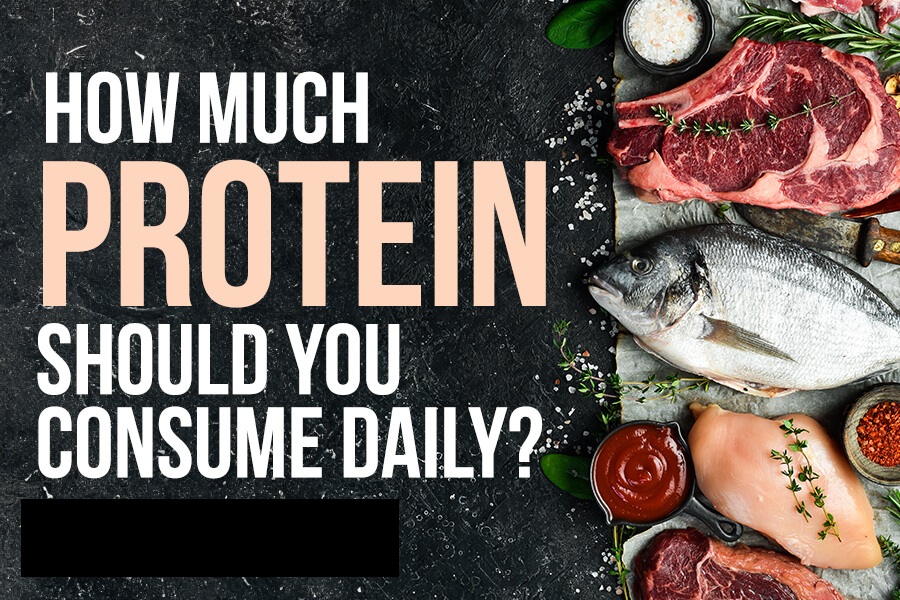
The standard recommendation of 0.8 grams of protein per kilogram of body weight is just the starting point. For most active adults and anyone over 65, that number is too low [2, 13].
Your real needs depend on your lifestyle. Use this table, based on peer-reviewed research, to find your “Activity Factor” and calculate your daily protein target [3].
Your Weight (in Kilograms) $\times$ Activity Factor = Total Grams of Protein Needed Per Day
| Activity Factor | Activity Level / Life Stage |
| 0.8 | Sedentary (little to no exercise) |
| 0.8 – 1.0 | General fitness or light activity |
| 1.0 – 1.2 | Older adults (65+) |
| 1.2 – 1.5 | Moderate amount of intense training |
| 1.7 – 2.0 | High volume of intense training (athletes) |
As you can see, a 65-year-old adult may need 50% more protein than a 35-year-old sedentary person just to maintain muscle mass [13].
The Benefits of Protein: Satiety & Weight Management
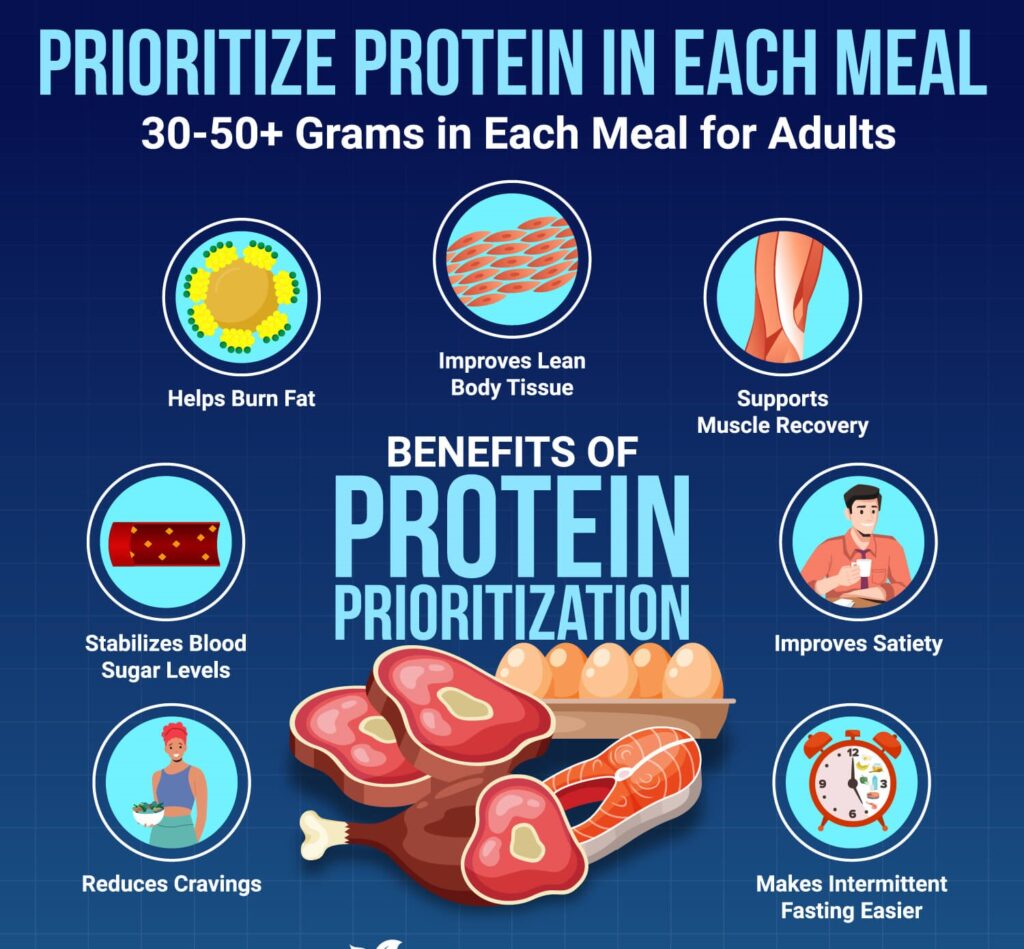
One of the most powerful benefits of protein is its effect on satiety, or the feeling of fullness.
Research shows that consuming a protein-rich breakfast has a positive effect on satiety and helps keep that system activated throughout the entire day. This isn’t just a “feeling”—these satiety effects, reduced hunger, and cravings after a high-protein breakfast have even been measured in the brain using fMRI scans [8, 9].
This leads to a powerful concept called “protein pacing.” Research shows it’s far more effective for your body to consume 20-30 grams of protein at several meals throughout the day, rather than one single, massive 80-gram protein meal at dinner [10, 11].
The Critical Role of Protein and Aging (Sarcopenia)
As we age, our bodies change, and our protein needs increase dramatically [13]. The primary reason is to fight sarcopenia.

Sarcopenia is the age-related decline in muscle mass, which can lead to a loss of strength. This is a serious health concern, as it contributes to frailty, disability, physical dependence, and a higher risk of mortality. This muscle loss is also linked to bone loss, as muscle strength is critical for maintaining bone density and preventing falls. Here’s the alarming fact: Once you reach the age of 30, your muscle mass may decline at a rate of 1% per year [15, 16, 21].
The solution? More protein, and the right kind. Research shows older adults need to consume 25 to 30 grams of high-quality protein per meal to build and maintain muscle. This dose must also contain about 2.5 to 2.8 grams of leucine (our “foreman” amino acid) to effectively “trigger” muscle protein synthesis, which becomes less sensitive with age [17, 18].
Protein’s “Helpers”: The Nutrients That Support Muscle

Protein doesn’t work in a vacuum. To build and maintain your “house,” it needs a full crew. Several other nutrients have been shown to positively impact muscle strength.
- Vitamin D, Calcium & Magnesium: The “VIVE2” study, which focused on mobility-limited older adults, found that physical activity was immensely protective of muscle health. It also found that those who consumed a high-protein, high-vitamin D supplement had reduced fat within the muscle and improved overall muscle composition [19]. Vitamin D, calcium, and magnesium are all critical for both bone health and healthy muscle function.
- Omega-3s: These mighty fatty acids from fish have been shown to increase the rate of muscle building. One study on healthy older adults found that omega-3 supplementation increased the rate of muscle protein synthesis, an effect similar to what leucine does [20]. Pairing high-quality protein and omega-3s can pack a powerful punch to protect against age-related muscle loss.
The Final Challenge: Finding a Protein You Can Trust
So, the science is clear. We need 20-30 grams of high-quality, leucine-rich protein, “paced” throughout the day. The easiest way to achieve this, especially at breakfast, is a high-quality protein shake.
But there’s a problem. The protein world is messy.
A shocking October 2025 Consumer Reports investigation found that more than two-thirds of 23 popular protein powders and shakes contained more lead in a single serving than their experts consider safe for a full day. The report also highlighted that plant-based powders were the most contaminated, with, on average, nine times more lead than dairy-based options [24].
This is the challenge for consumers. How do you find a product that is not only effective but also pure?
🩺 Science Over Shelf Hype
Most $15 drugstore “protein” powders rely on fillers, and as a 2025 Consumer Report shows, can be contaminated with toxic heavy metals [24].
NeoLife’s Metabolic Health Range is different — whole-food based, clinically validated, and made to pharmaceutical-grade standards. Each formula is traceable from farm to capsule. Its NeoLifeShake is clinically proven in a human trial to support weight loss, reduce body fat, and lower LDL cholesterol—all without enforced diet or exercise [12].
If you’re done gambling with generic bottles, start choosing real nutrition your body recognizes.
🔗 Also read:
- The Dark Side of Protein Powders: What the 2025 Consumer Reports Investigation Revealed About Hidden Heavy Metals.
- The Dirty Truth About Cheap Supplements: What $20 Vitamins and Protein Powders Are Really Hiding.
- Healthy Weight Control: New Science on Brown Fat, Low-GI Eating, Protein Breakfasts & Sleep.
- The Quality Difference: Why “Clean, Clinically Proven” Supplements Win (and the Rest Don’t).
- From Sea to Supplement: Navigating Sustainably Sourced Fish Oils.
References
- Protein. The Nutrition Source. https://www.hsph.harvard.edu/nutritionsource/what-should-you-eat/protein/ Published September 18, 2012.
- Protein and the Athlete How Much Do You Need? https://www.eatright.org/fitness/sports-and-performance/fueling-your-workout/protein-and-the-athlete.
- Kerksick CM, Wilborn CD, Roberts MD et al. ISSN exercise & sports nutrition review update: research & recommendations. J Int Soc Sports Nutr 2018:15(1).
- 2015-2020 Dietary Guidelines. https://health.gov/dietaryguidelines/2015/guidelines/.
- Wu G. Amino acids: metabolism, functions, and nutrition. Amino Acids 2009;37(1):1-17.
- Food and Agriculture Organization of the United Nations, ed. Dietary Protein Quality Evaluation in Human Nutrition… Rome: Food and Agriculture Organization of the United Nations: 2013
- Hoffman JR, Falvo MJ. Protein-which is best? J Sports Sci Med. 2004:3(3) 118-130
- Leidy HJ, Bossingham MJ, Mattes RD, Campbell WW. Increased dietary protein consumed at breakfast leads to an initial and sustained feeling of fullness… Br J Nutr 2008;101(0):798-803.
- Leidy HJ, Lepping RJ, Savage CR, Harms CT. Neural responses to visual food stimuli after a normal vs. higher protein breakfast in breakfast-skipping teens… Obesity (Silver Spring) 2011:19(10):2019-2025.
- Paddon-Jones D, Rasmussen BB. Dietary protein recommendations and the prevention of sarcopenia. Curr Opin Clin Nutr Metab Care 2009:12(1):86-90.
- Arciero PJ, Edmonds R, He F, et al. Protein-pacing caloric-restriction enhances body composition similarly in obese men and women… Nutrients 2016:8(8):476.
- Udani, Pakdaman M, Srivastava A, Miller J. Assessing the efficacy of the GNLD NeoLifeShake protein-based meal replacement product on weight loss… American College of Nutrition 55th Annual Conference, 2014.
- Nowson C, O’Connell S. Protein requirements and recommendations for older people: A review. Nutrients, 2015; 7(8):6874-6899.
- Remond D, Shahar DR, Gille D, et al. Understanding the gastrointestinal tract of the elderly to develop dietary solutions that prevent malnutrition. Oncotarget 2015(16):13858-13898
- Deer RR, Volpi E. Protein intake and muscle function in older adult. Curr Opin Clin Nutr Metab Care 2015;18(3):248-253.
- Morley JE, Abbatecola AM, Argiles JM, et al. Sarcopenia with limited mobility: An international consensus. J Am Med Dir Assoc 2011:12(6):403-409.
- Bauer J, Biolo G, Cederholm T, et al. Evidence-based recommendations for optimal dietary protein intake in older people: A position paper from the PROT-AGE Study Group. J Am Med Dir Assoc. 2013:14(8)-542-559.
- Casperson SL, Sheffield-Moore M, Hewlings SJ, Paddon-Jones D. Leucine supplementation chronically improves muscle protein synthesis in older adults consuming the RDA for protein. Clin Nutr 2012:31(4):512-519.
- Englund DA, Kirn DR, Koochek A, et al. Nutritional supplementation with physical activity improves muscle composition in mobility-limited older adults, the VIVE2 Study… J Gerontol A Biol Sci Med Sci 2018:73(1):95-101.
- Smith GI, Atherton P, Reeds DN, et al. Dietary omega-3 fatty acid supplementation increases the rate of muscle protein synthesis in older adults… Am J Clin Nutr 2011:93(2):402-412.
- Landi F, Calvani R, Cesari M, et al. Sarcopenia: An overview on current definitions, diagnosis and treatment. Curr Protein Pept Sci 2018:19(7):633-638.
- Tieland M, Dirks ML, van der Zwaluw N, et al. Protein supplementation increases muscle mass gain during prolonged resistance-type exercise training in frail elderly people… J Am Med Dir Assoc 2012:13(8):713-719.
- Esmarck B, Andersen JL, Olsen S, Richter EA, Mizuno M, Kjaer M. Timing of postexercise protein intake is important for muscle hypertrophy with resistance training in elderly humans. J Physiol 2001;535(1):301-311.
Pingback: Omega-3 and Carotenoids for Eye Health: The Science of Vision Protection.