

Your heart is, without question, the hardest-working muscle in your body. It’s approximately the size of your two hands clasped together, yet it pumps an astonishing 7,500 liters of blood every single day [1, 2]. In an average 70-year lifetime, your heart will beat more than 2.5 billion times [1].
This relentless organ is the engine of your cardiovascular health system, a vast network of blood vessels totaling 100,000 kilometers—enough to circle the Earth more than twice [1]. This system’s job is to deliver life-giving oxygen and nutrients to every cell in your body and remove waste.
Because a healthy heart is so central to overall good health, it needs to be a priority [1]. This post explores the science of how your cardiovascular system works, the “silent” threat that can clog it, and the key nutrients clinically shown to support it.
🔬 The Science: How Your Heart & Blood Vessels Work.
Think of your heart as a powerful, four-chambered pump [3]. Its “lub-dub” sound is simply the rhythmic closing of its valves as it contracts to ensure blood flows in the right direction [3].
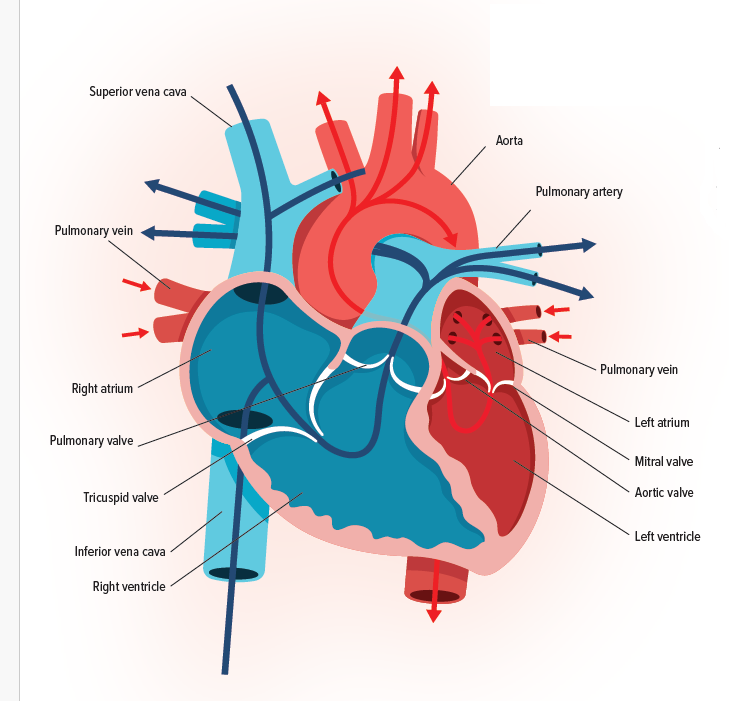
This entire system can be compared to a water pump (the heart) and the pipes (the blood vessels). If the pump is working perfectly but the pipes are blocked, water can’t get to the taps. In the same way, your heart’s efforts are useless if blood can’t flow freely through your arteries.
This brings us to the single biggest threat to the cardiovascular health system: plaque.
💡 The Insight: The “Silent” Danger of Atherosclerosis
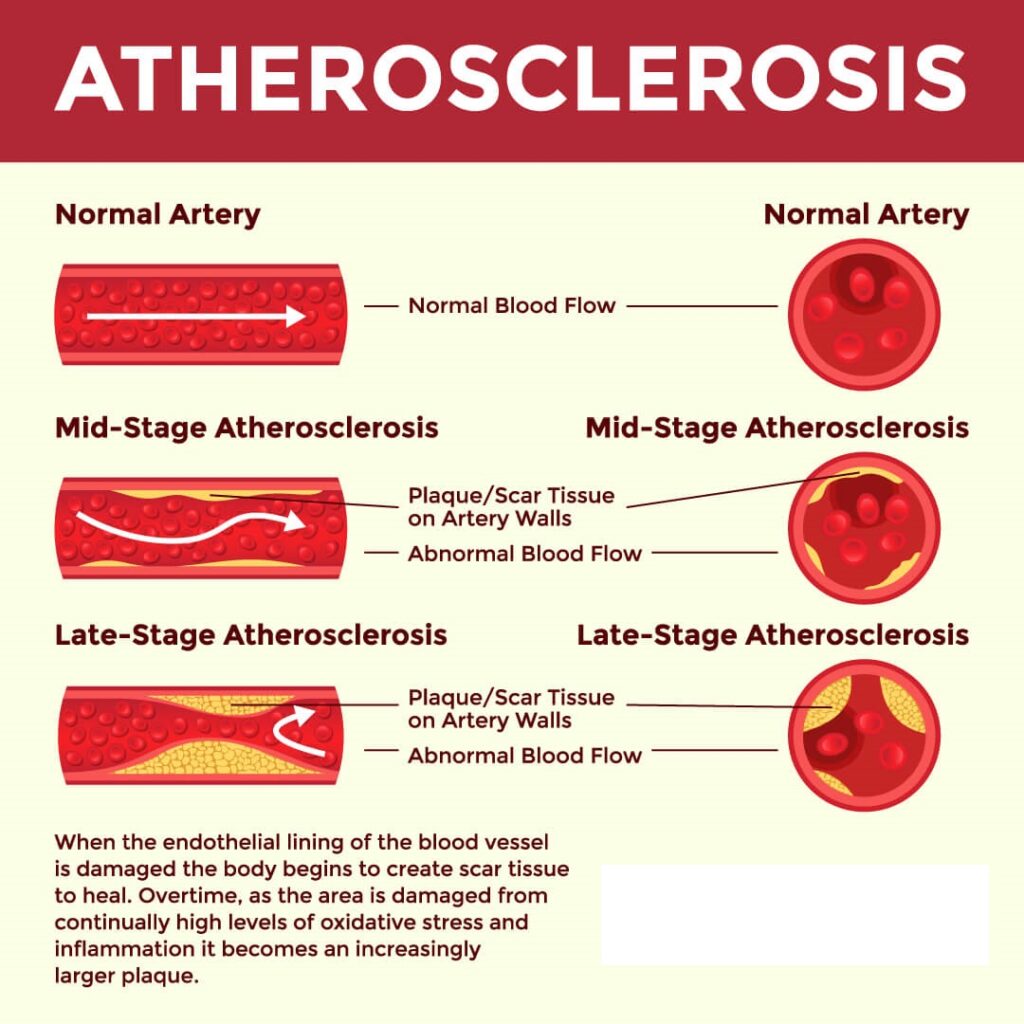
Atherosclerosis is a condition characterized by the slow, insidious buildup of a sticky substance called plaque (cholesterol, fats, and other substances) inside your arteries [4, 5].
This process often begins in youth and is driven by lifestyle factors. It starts with damage to the inner layer of the artery (the endothelium), which triggers an inflammatory response [5]. This causes cholesterol and cell waste to collect at the damaged spot, slowly growing over years or decades [4, 5].
As this plaque builds up, your arteries stiffen and narrow. This has two dangerous effects:
- It restricts blood flow, meaning less oxygen can get to your vital organs.
- It forces your heart to work harder to push blood through the narrowed arteries, leading to an increase in blood pressure.
If left unchecked, this plaque can rupture and form a blood clot, completely blocking blood flow and leading to a heart attack or stroke [4].
This entire process is the main cause of Cardiovascular Diseases (CVDs), which are the number one cause of death globally [6, 7].
The most dis-heartening part? The numbers are staggering. The most encouraging part? The World Health Organization (WHO) states that most cardiovascular diseases can be prevented by addressing behavioral risk factors like an unhealthy diet, physical inactivity, tobacco use, and chronic stress [6, 11, 13, 14].
🧬 The Solution: A Scientific Strategy for Your Cardiovascular Health System
A healthy, balanced diet—like the DASH diet—is a proven strategy for managing CVD risk [18, 19]. But research has identified several specific nutrients that deserve a special “shoutout” for their profound benefits to heart and cardiovascular health [21].

Let’s look at the science behind three of the most important.
1. Coenzyme Q10 (CoQ10)
The Science: CoQ10 is an antioxidant that plays a key role in producing ATP, the primary energy source for all our cells [22]. Your heart, being the hardest-working muscle, has a massive demand for ATP. The problem is that our natural CoQ10 production slows with age, and cholesterol-lowering statin drugs are known to deplete it further [22]. A two-year clinical trial on patients with heart failure found that taking 100 mg of CoQ10 three times a day significantly reduced hospitalizations and the risk of dying from CVD [23].
The NeoLife Difference: NeoLife’s CoQ10 is not just CoQ10; it’s a complete Mitochondrial Energy Complex. Based on whole-food science, it includes a proprietary Phyto-Lipid & Sterol Blend (from Tre-en-en) to support mitochondrial structure and grape polyphenols for extra antioxidant protection [27].
2. Garlic (and the Allium Family)
The Science: Garlic has been used for its medicinal properties for thousands of years [24]. Modern science now confirms its association with reduced cholesterol levels, blood pressure, and heart disease risk. A recent meta-analysis found that garlic supplementation in individuals with hypertension resulted in a significant decrease in systolic blood pressure (by 8.7 mmHg) and diastolic blood pressure (by 6.1 mmHg) [25].
The NeoLife Difference: Most garlic supplements fail. If it stinks, the active allicin is already present and will be destroyed by stomach acid. If it’s “deodorized,” it’s useless. NeoLife’s Garlic Allium Complex uses Targeted Delivery Technology. An enteric coating protects the tablet, allowing it to pass the stomach. In the intestine, it delivers a guaranteed 4,200 mcg of active allicin (from garlic, onion, chive, and leek) at the site of absorption, ensuring maximum benefit with no “garlic breath” [28].
3. Omega-3 Fatty Acids (EPA & DHA)
The Science: Heart associations recommend that all adults eat fatty fish (like salmon or tuna) at least twice a week [17]. This is because they are rich in the omega-3s EPA and DHA. Large-scale studies show that consuming 0.5-1.8 grams of EPA+DHA per day significantly reduces deaths from heart disease [20]. Omega-3s have powerful anti-inflammatory effects and help improve the function of the vascular endothelium (the lining of your arteries) [21].
The NeoLife Difference: Omega-3 Salmon Oil Plus (now Omega-3 Plus) is not just based on “associations”—it’s backed by its own human clinical trial. In just eight weeks, this exclusive formula (with all 8 omega-3s) was clinically proven to:
- Reduce triglycerides by 17%
- Lower the Inflammatory Index by 68%
- Improve the Omega-3 Index by 38% [26]
Furthermore, it is made from 100% wild-caught fish, screened for over 200 contaminants to guarantee purity [29].
🩺 Science Over Shelf Hype
Most $15 drugstore “heart health” pills rely on synthetic isolates, poor absorption, and zero traceability.
NeoLife’s Heart Health Range is different — whole-food based, clinically validated, and made to pharmaceutical-grade standards. Each formula is traceable from farm to capsule, with proven bioavailability in human studies.
If you’re done gambling with generic bottles, start choosing real nutrition your body recognizes.
👉 Explore NeoLife’s Heart Health Range — CoQ10, Garlic Allium Complex, and Omega-3 Plus — where purity meets clinical proof.
🔗 Also read:
- The Science of Heart Healthy Supplements: A Deeper Look at What Really Works.
- Introducing Omega-3 Plus – The Same Powerful Benefits, Now More Sustainable.
- From “Insurance” to “Investment”: The New Science of Multivitamins and Memory.
- The Ultimate Guide to Mitochondrial Health: Your Cellular Powerhouses Explained.
References
- 27 Amazing Facts About Your Heart. Cleveland Clinic. Published August 13, 2021.
- Heart Facts infographic. American Heart Association.
- Blood Flow Through the Heart. Cleveland Clinic. Updated April 29, 2022.
- What is Atherosclerosis? US National Heart, Lung, and Blood Institute. Updated March 24, 2022.
- Jehari-Benslaiman S, et al. Pathophysiology of atherosclerosis. Int J Mol Sci 2022: 23(6): 3346.
- Cardiovascular diseases (CVDs) Fact Sheet. World Health Organization. Updated June 11, 2021.
- Roth G, et al. Global Burden of Cardiovascular Diseases and Risk Factors, 1990-2019. J Am Coll Cardiol, 2020, 76(25): 2982-3021.
- Cardiovascular Disease in Sub Sharan Africa. Editorial. Editor, Ntobeko A.B. Ntusi.
- https://www.nigerianheart.org
- https://www.heartfoundation.co.za/wp-content/uploads/2017/10/CVD-Stats-Reference-Document-2016
- Physical Activity, World Health Organization. Published November 26, 2020.
- Adams V, Linke A. Impact of exercise training on cardiovascular disease and risk. Biochim Biophys Acta Mol Basis Dis. 2019; 1865(4): 728-34.
- Yao BC, et al. Chronic stress: a critical risk factor for atherosclerosis. Int Med Res. 2019: 47(4): 1429-40.
- Stress and Heart Health. American Heart Association. Updated June 21, 2021.
- Anand SS, et al. Food consumption and its impact on cardiovascular disease: Importance of solutions focused on the global food system. J Am Coll Cardiol. 2015, 66(14) 1590-614.
- Healthy Diet. World Health Organization. Accessed July 21, 2022.
- The American Heart Association Diet and Lifestyle Recommendations. Updated November 1, 2021.
- Karppanen H, et al. Why and how to implement sodium, potassium, calcium, and magnesium changes in food items and diet? J Hum Hypertens 2005: 19(3): 510-9.
- Filippou CD, et al. Dietary Approaches to Stop Hypertension (DASH) diet and blood pressure reduction in adults with and without hypertension: A systematic review and meta-analysis of randomized controlled trials. Adv Nutr 2020: 11: 1150-60.
- Kris-Etherton PM, et al. Omega-3 fatty acids and cardiovascular disease. Arterioscler Thromb Vasc Biol. 2003;23(2): 151-2.
- Wei T, et al. The relationship between nutrition and atherosclerosis. Front Bioeng Biotechnol 2021; 9: 635504.
- Guttierrez-Mariscal FM, et al. Coenzyme Q10 and Cardiovascular Diseases. Antioxidants 2021, 10: 906.
- Mortensen SA, et al. The effect of coenzyme 10 on morbidity and mortality in chronic heart failure: results from Q-SYMBIO: A randomized double-blind trial. JACC Heart Fail 2014: 2(6): 641-9.
- Rahman K, Lowe GM. Garlic and cardiovascular disease: a critical review. J Nutr. 2006 Mar, 136(3 Suppl) 736S-740S.
- Ried K. Garlic Lowers Blood Pressure in Hypertensive Individuals, Regulates Serum Cholesterol, and Stimulates Immunity: An Updated Meta-analysis and Review. J Nutr. 2016 Feb 146(2): 389S-396S.
- Information based on the human clinical trial on Omega-3 Salmon Oil Plus
Pingback: Coenzyme Q10: A Complete Guide to the Science and Benefits
Pingback: What is Homocysteine? A Scientific Guide to This Critical Heart Health Risk