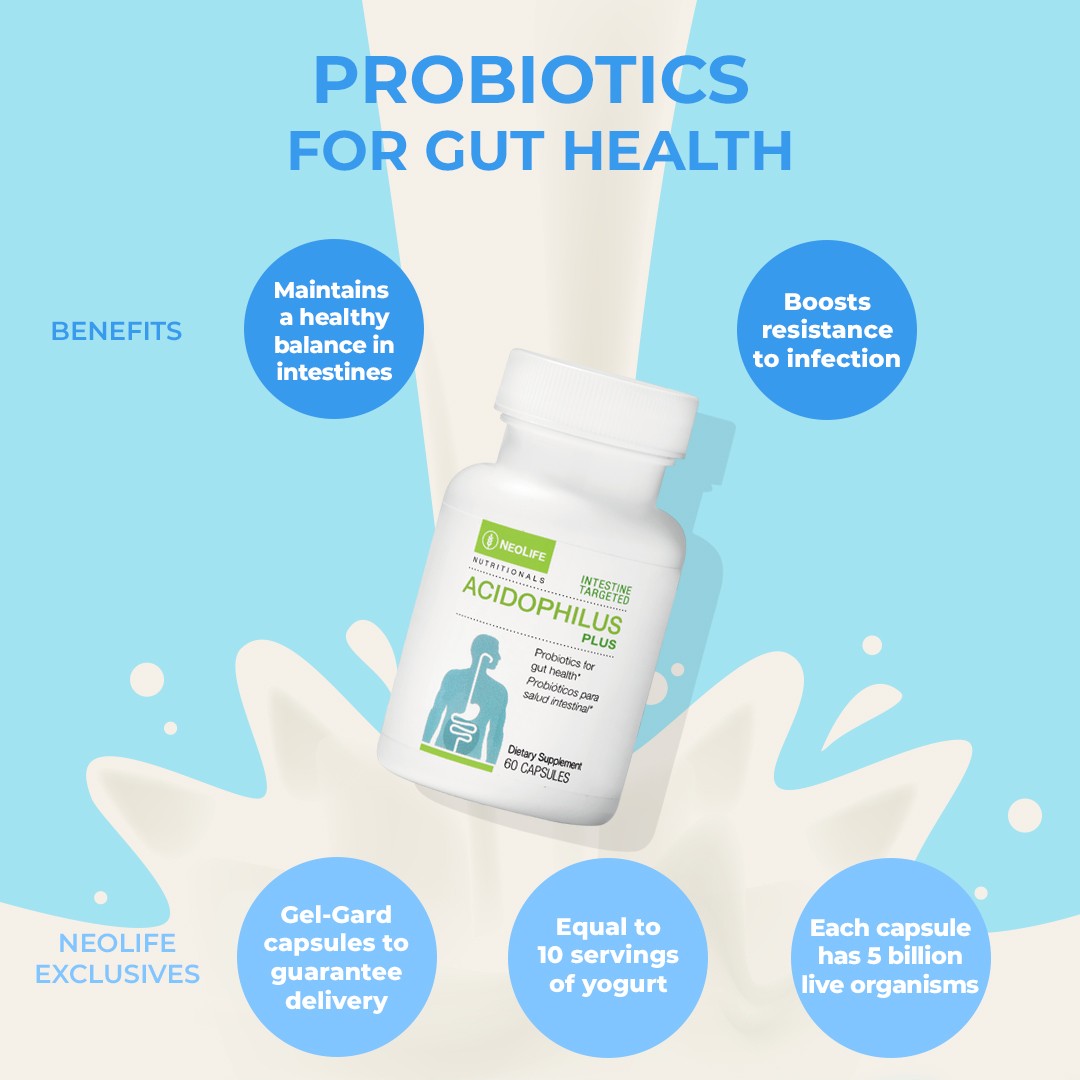
What are the best probiotics for women and men? It is one of the most searched health questions today, and for good reason. The human gut is home to over 100 trillion microorganisms, a complex ecosystem that influences everything from your digestion and immunity to your mood and metabolic health.
But the truth behind probiotic supplements is far less glamorous than the marketing makes it seem.
Most products on the shelves today fail to meet even the minimum scientific criteria for effectiveness.
- They are dead on arrival: Heat, moisture, and time kill bacteria long before you buy them.
- They die in the stomach: Without specialized protection, stomach acid destroys up to 99% of probiotic organisms before they ever reach the intestine.
- They are mislabeled: Independent DNA testing has revealed that many supplements contain the wrong strains—or no live bacteria at all [1].
This guide cuts through the hype. We will explore what the science actually says, the real problems in the supplement market, and the rigorous criteria required to identify the best probiotics that deliver real biological benefits.
What Do Probiotics Actually Do? The Science of the Microbiome
Before we look at which probiotic to take, we must understand why we need them. We used to view bacteria as enemies. We now know that we are “holobionts”—an integrated unit of human and microbial cells.
Probiotics are not just for “digestion.” They are active biochemical factories that play critical roles in your systemic health.
1. The Gut-Brain Axis: Your “Second Brain”
Perhaps the most profound discovery is the biological highway connecting your gut and your brain.
- Neurotransmitters: Gut bacteria produce critical neurotransmitters like GABA (which calms anxiety) and regulate serotonin (which controls mood).
- The Proof: A landmark study published in Gastroenterology used functional MRI (fMRI) scans to prove this connection. Healthy women who consumed a fermented probiotic for 4 weeks showed altered activity in brain regions that control emotion and sensation [3]. The bacteria in their gut literally changed how their brains responded to the world.
2. The Immune Headquarters
Around 70% of your immune system resides in your gut. Probiotics support this defense system by strengthening the intestinal barrier (preventing “leaky gut”) and modulating immune response.
- The Proof: In a study of fatigued athletes—who often suffer from suppressed immunity due to overtraining—researchers found that a specific probiotic (Lactobacillus acidophilus) significantly increased the secretion of Interferon-gamma (IFN-γ), a critical virus-fighting immune chemical. The probiotics effectively reversed the athletes’ immune defect [4].
3. Skin Health: The Gut-Skin Connection
Inflammation in the gut often mirrors inflammation on the skin. Clinical trials have explored the use of probiotics as a therapeutic adjunct for skin conditions.
- The Proof: A prospective, randomized trial found that adding a probiotic supplement to standard acne treatment significantly improved total lesion counts and reduced the side effects of antibiotics [6].
The “Wild West” Market: Why Most Supplements Fail
If the science is so strong, why do so many supplements fail to work? The answer lies in the fragility of the bacteria and the lack of regulation.
1. The “Dead on Arrival” Problem
Probiotics are live organisms. They are notoriously sensitive to heat, oxygen, and moisture.
- The Reality: Most products advertise Colony Forming Units (CFUs) “at time of manufacture.” By the time the bottle sits in a hot warehouse, travels on a truck, and sits on a shelf, the potency may have dropped by 90% or more [1].
- The FDA Warning: The risks of poor manufacturing are real. In 2023, the FDA issued a severe warning regarding probiotic use in preterm infants after products were found to be contaminated, highlighting the danger of using “supplement grade” products in clinical settings [5].
2. The Acid Trap
Even if the bacteria are alive in the capsule, they face a deadly gauntlet: the human stomach.
- The stomach produces hydrochloric acid (pH 1.5–3.5) specifically to kill ingested bacteria.
- Without sophisticated enteric protection technology, standard gelatin capsules dissolve in the stomach, releasing the probiotics into an acid bath that destroys them. They never reach the intestine where they are needed.
How to Choose the Best Probiotics: The 5 Criteria
To evaluate a probiotic, you must look beyond the “billions” on the label. You need proof of survival and identity.
Here are the 5 evidence-based criteria for a quality probiotic:
- Genetic Identity: Does the manufacturer verify the DNA of the strain? (Generic “Lactobacillus” is not enough; you need specific, clinically studied strains).
- Gut-Targeted Delivery: Does it have a mechanism to survive stomach acid? (Enteric coating or targeted delivery).
- Human-Compatible Strains: Are the bacteria derived from human sources (intestine-targeted) rather than soil or animal sources?
- Potency at Expiry: Does the label guarantee the count through the expiration date, not just at manufacture?
- Clinical Proof: Has the final product been tested in humans?
🧬 The Solution: Intestine-Targeted Technology
NeoLife’s “Evidence First” approach addresses the two biggest failures of the industry: viability and delivery.
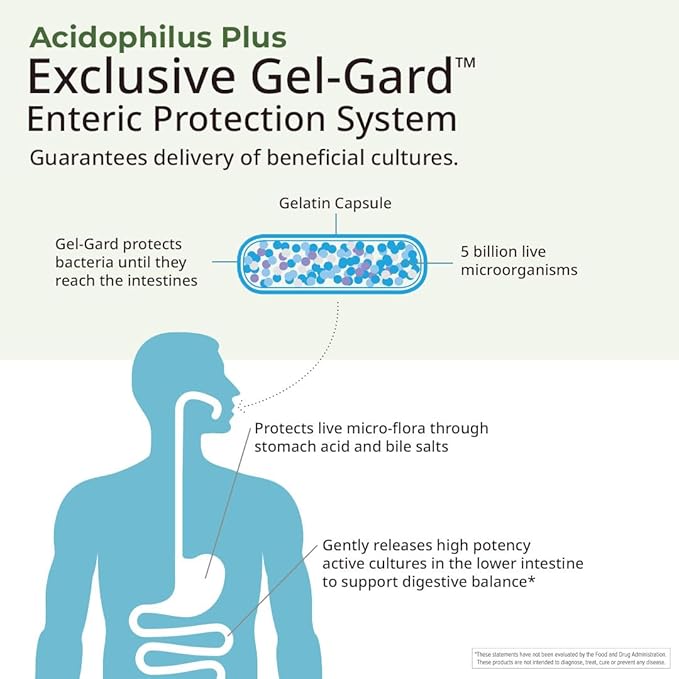
1. The “Gel-Gard” Protection System Most capsules dissolve in the stomach. NeoLife’s Acidophilus Plus uses exclusive Gel-Gard™ technology.
- How it works: This matrix protects the bacteria from the harsh acidic environment of the stomach. It is designed to dissolve only when it reaches the alkaline environment of the intestine.
- The Result: This ensures that the maximum number of live bacteria are delivered directly to the target site—the intestine—where they can colonize and function.
2. Five Billion “Guaranteed Live” We don’t play the “at time of manufacture” game. Each capsule is guaranteed to deliver 5 billion live microorganisms through the expiration date.
- Broad Spectrum: It contains a potent blend of five clinically verified strains: Lactobacillus acidophilus, Lactobacillus bulgaricus, Lactobacillus casei, Bifidobacterium bifidum, and Streptococcus thermophilus.
- Human Adapted: These are intestine-targeted strains chosen for their ability to support digestive balance and immune function.
3. Proven Clinical Efficacy We don’t just claim it works; we test it. The specific strains and formulation concepts used in Acidophilus Plus are supported by the clinical research cited above—demonstrating real-world benefits for immune modulation and gut health [4, 6].
📊 Evidence-Based Probiotic Comparison Chart
| Quality Criterion | Low-Quality Market Probiotics | Evidence-Based Standard | Acidophilus Plus |
|---|---|---|---|
| Identified Strains | Often generic or mislabeled | Specific, human strains | ✔️ L. acidophilus, B. bifidum |
| Clinical Evidence | Rarely validated | Supported by human studies | ✔️ Backed by extensive research |
| Potency at Expiry | CFU counts collapse | Guaranteed live counts | ✔️ Nitrogen-packed, stable |
| Survives Stomach Acid | Mostly destroyed | Protected delivery | ✔️ Exclusive Gel-Gard system |
| Purity Tested | Often contaminated | Must be verified | ✔️ Pharmaceutical-grade screening |
| Manufacturing Quality | Weak controls | Tight environmental parameters | ✔️ Controlled, protected, audited |
🩺 Science Over Shelf Hype
Most “best probiotics” lists promote cheap products with big CFU numbers but no delivery technology. If the bacteria die in your stomach, the “billions” on the label are meaningless.
NeoLife’s Acidophilus Plus is different. It uses Gel-Gard™ technology to survive stomach acid and deliver 5 billion live organisms directly to the intestine. It is whole-food derived, genetically verified, and manufactured to pharmaceutical standards.
If you’re done gambling with dead bacteria, start choosing real nutrition your gut recognizes.
👉 Explore NeoLife’s Acidophilus Plus — where targeted delivery meets clinical proof.
A generous portion of profits from every purchase supports the NeoLife Family Foundation and its global humanitarian outreach.
🔗 Also read:
- [The Latest in Women’s Health and Nutrition: A Science-Backed Guide.]
- [The Quality Difference: Why “Clean, Clinically Proven” Supplements Win (and the Rest Don’t).]
- [From “Insurance” to “Investment”: The New Science of Multivitamins and Memory.]
🎓 Join the Inner Circle
Want to go deeper? Join our private Skool community for daily science breakdowns, live Q&A, and a network of health-conscious individuals mastering their physiology.
👉 [Join the Clean Supplement Science Inner Circle Here]
References
- Weese, S. J., & Martin, H. (2011). Assessment of commercial probiotic bacterial contents and label accuracy. Canadian Veterinary Journal, 52(1), 43–46.
- Morovic, W., et al. (2016). Safety limits of probiotic bacteria. Frontiers in Microbiology, 7, 1662.
- Tillisch, K., et al. (2013). Consumption of fermented milk product with probiotic modulates brain activity. Gastroenterology, 144(7), 1394-1401.
- Clancy, R. L., et al. (2006). Reversal in fatigued athletes of a defect in interferon gamma secretion after administration of Lactobacillus acidophilus. British Journal of Sports Medicine, 40(4), 351–354.
- U.S. Food and Drug Administration. (2023). FDA Raises Concerns About Probiotic Products Sold for Use in Hospitalized Preterm Infants. FDA Safety Communication.
- Jung, G. W., et al. (2013). Prospective, randomized, open-label trial comparing the safety, efficacy, and tolerability of an acne treatment regimen with and without a probiotic supplement… Journal of Cutaneous Medicine and Surgery, 17(2), 114-122.