
Trying to find the best vitamin d supplement on the market today can be incredibly confusing. Some bottles are 1,000 IU, others are 10,000 IU. Some are combined with calcium, while others are just an isolated nutrient. Does any of this matter? And with alarming reports that up to 1 billion people worldwide are deficient, are you one of them? [1, 2]
Here’s the truth: the “best” supplement isn’t just about the dose. It’s about the science.
Over the last decade, more than 2,000 published articles have reported on Vitamin D clinical research. We now know that this “sunshine vitamin” is not just a vitamin—it’s a potent hormone that regulates your entire body [2, 3].
But it has a critical weakness: it cannot work alone.
This post is a comprehensive guide to understanding Vitamin D. We will explore the science of what it does, why deficiency is a modern epidemic, and the single most important “partner nutrient” (magnesium) that your body must have to even use it.
What is Vitamin D? The “Sunshine Vitamin” Explained

First, we need to understand what we’re dealing with. So, what is vitamin d?
It’s a fat-soluble vitamin, meaning it dissolves in fat and cannot be dissolved in water. It is found in a few foods like fish liver oils, cheese, and egg yolks, but the vast majority of our supply is not meant to come from food [1, 2].
Our bodies are designed to produce it when ultraviolet (UV) rays from the sun hit our skin [1, 2]. But it’s not active yet. Before it can be used, it must go through two mandatory transformations [1, 4]:
- Liver Activation: The first transformation occurs in the liver, where Vitamin D is converted into a form called 25-hydroxyvitamin D, or 25(OH)D. This is the circulating form that is measured in a blood test to determine your levels [3].
- Kidney Activation: The second transformation occurs in the kidney, where 25(OH)D is converted into the final, active form known as 1,25-dihydroxyvitamin D3. This is the potent, biologically active hormone that can be used by your cells [1, 4].
The “Dynamic Duo” and the “Critical Trio”
Vitamin D’s most famous role, and one of its most critical, is to manage calcium.
What is Vitamin D Good For? Bone Health
Vitamin D functions as a hormone to regulate and impact calcium transport throughout the body [1]. Its primary job is to ensure that calcium and phosphate levels in the blood are constant [1].
Why is this so important? If your calcium levels are not stable, the process of “mineralisation”—the building up of new, strong bone—fails [1].
- In children, this failure leads to a condition called rickets, where the bones are soft, misshapen, and can result in “bowed legs” [5].
- In adults, this same condition is called osteomalacia, or “soft bones” [5].
- In older adults, both calcium and Vitamin D are helpful in protecting against osteoporosis, a condition of porous, fragile bones that leads to an increased risk of fractures [5].
But Vitamin D cannot do this alone. It has a “dynamic duo” partner in calcium, but it is entirely dependent on a third nutrient to even get started.
The Critical Cofactor: Why Magnesium is Essential
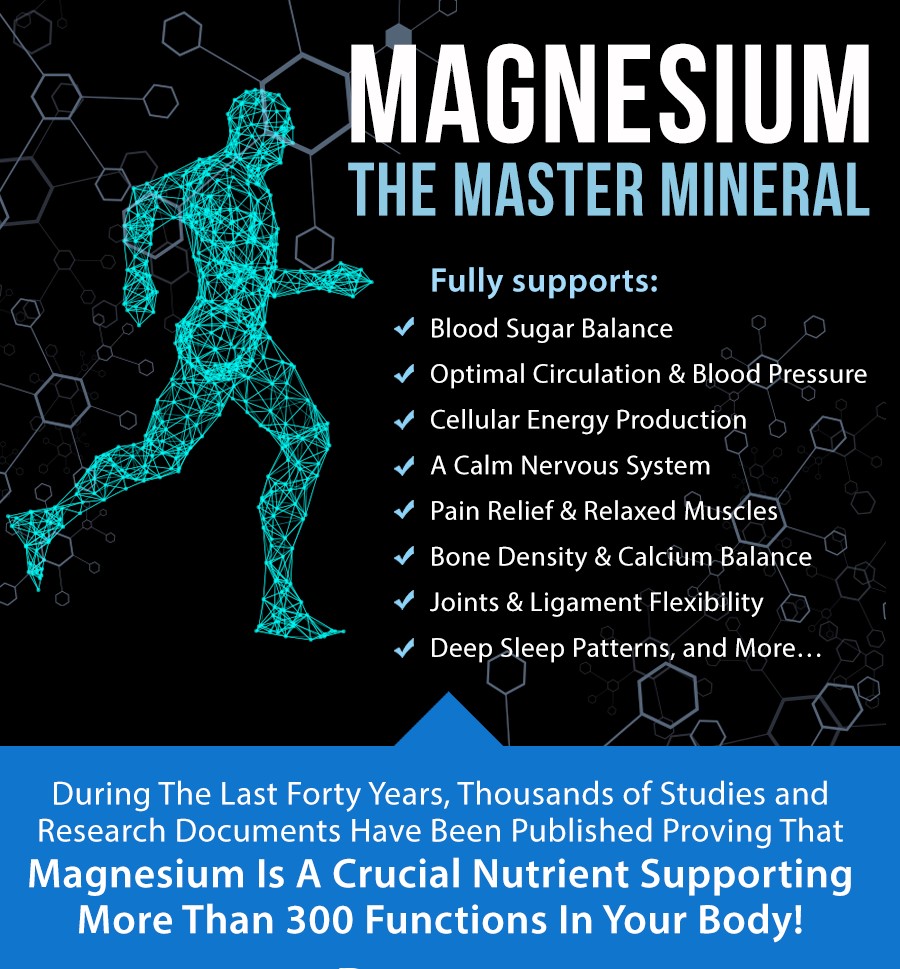
Magnesium adds power to the dynamic duo. It is a critical cofactor for the activation of Vitamin D.
Those two transformations we just discussed—the ones in the liver and the kidney—are entirely dependent on magnesium [6]. Recent research has confirmed this, with 2024 reviews in Nutrients and Frontiers in Nutrition identifying magnesium as a critical cofactor for all the enzymes that metabolize Vitamin D [6, 7].
This is one of the most overlooked facts in nutrition.
You can be taking high doses of Vitamin D, but if you are low in magnesium, your body may be unable to activate and use it [6, 7].
A 2023 study even found that a high magnesium intake was associated with a reduced risk of Vitamin D deficiency [8]. Optimal magnesium status is essential for the vitamin D form to even be activated in the kidney [6, 7].
The Vitamin D Deficiency Epidemic: Are You at Risk?
The fact that we get Vitamin D from the sun seems simple enough. So why are we so deficient?
How Widespread is Vitamin D Deficiency?
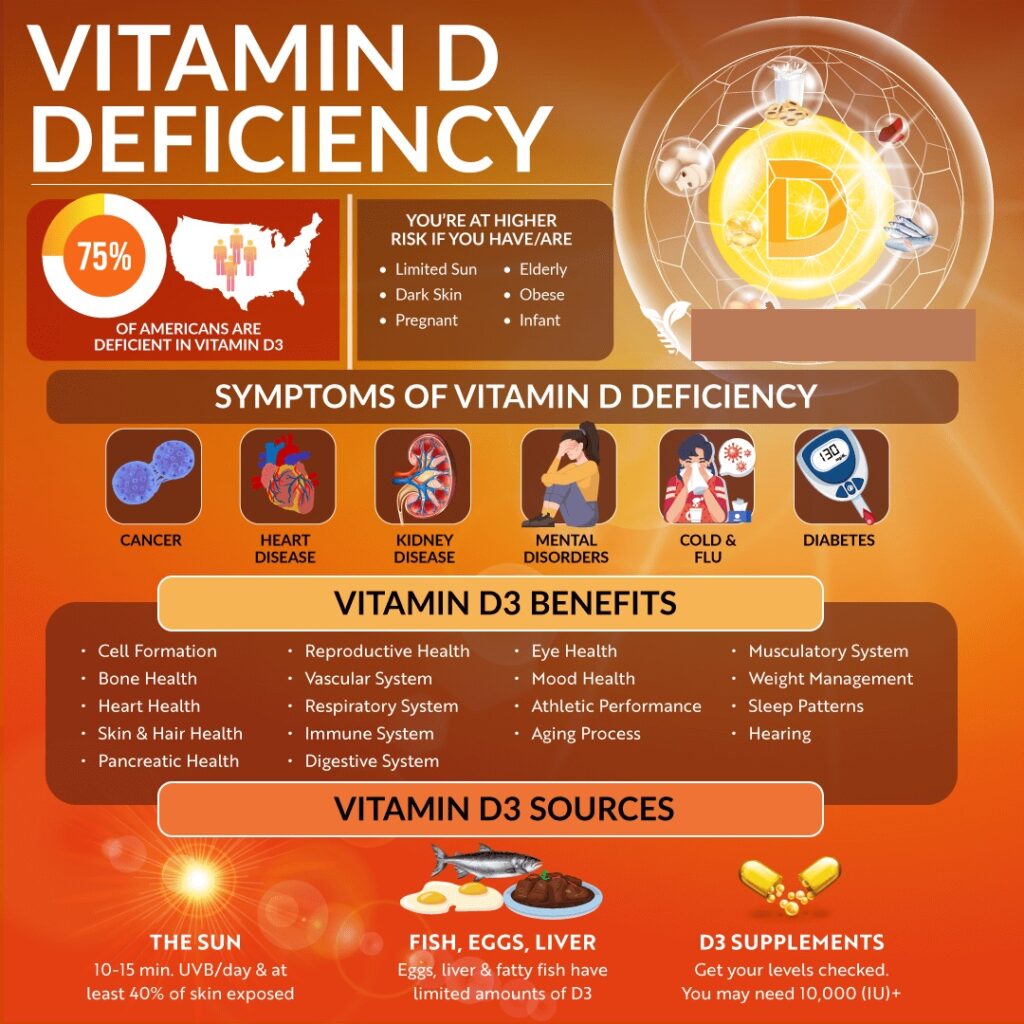
The numbers are staggering. As mentioned, worldwide, it’s been determined that almost 50% of the population is affected by low vitamin D status [3]. Vitamin D deficiency affects up to 1 billion people worldwide, making it a true global pandemic [1].
To find out if you are one of them, your doctor must measure the circulating 25(OH)D in your blood [3]. While levels can vary, a general consensus defines deficiency as a serum level below 12 ng/mL, with “insufficiency” (not optimal) being between 12-20 ng/mL [3].
Who is at High Risk for Deficiency?
This modern epidemic is driven by lifestyle and physiology. You are at a higher risk if you fall into any of these groups:
- People with Dark Skin: The same pigment (melanin) that protects the skin from sun damage also reduces its ability to produce Vitamin D from sunlight. Dark-skinned individuals may require significantly more sun exposure than light-skinned individuals to make the same amount [3, 5].
- People with Limited Sun Exposure: This includes people who are housebound, live in northern latitudes, wear sun-protective clothing for religious reasons, or who are office workers [3].
- People Who Use Sunscreen: Sunscreen is still critically important for preventing skin cancer. But it’s important to know that sunscreen designed to block UV rays also blocks your skin’s ability to produce Vitamin D [1].
- Older Adults: As we age, our skin becomes less efficient at producing Vitamin D [3].
- People Who are Obese: Vitamin D is fat-soluble. In relation to body weight, excess fat in the body can “trap” the vitamin in fat tissue, preventing it from circulating in the blood where it’s needed [3].
- Breastfed Infants: The American Academy of Pediatrics recommends that all breastfed infants be supplemented with 400 IU (10 mcg) of Vitamin D per day, as the amount in breast milk is typically not enough to meet an infant’s needs [3, 5].
- People with Malabsorption Issues: Those who have undergone gastric bypass surgery or have conditions like Crohn’s or celiac disease may have a reduced ability to absorb Vitamin D from food [3].
What is Vitamin D Good For? Benefits Beyond the Bones
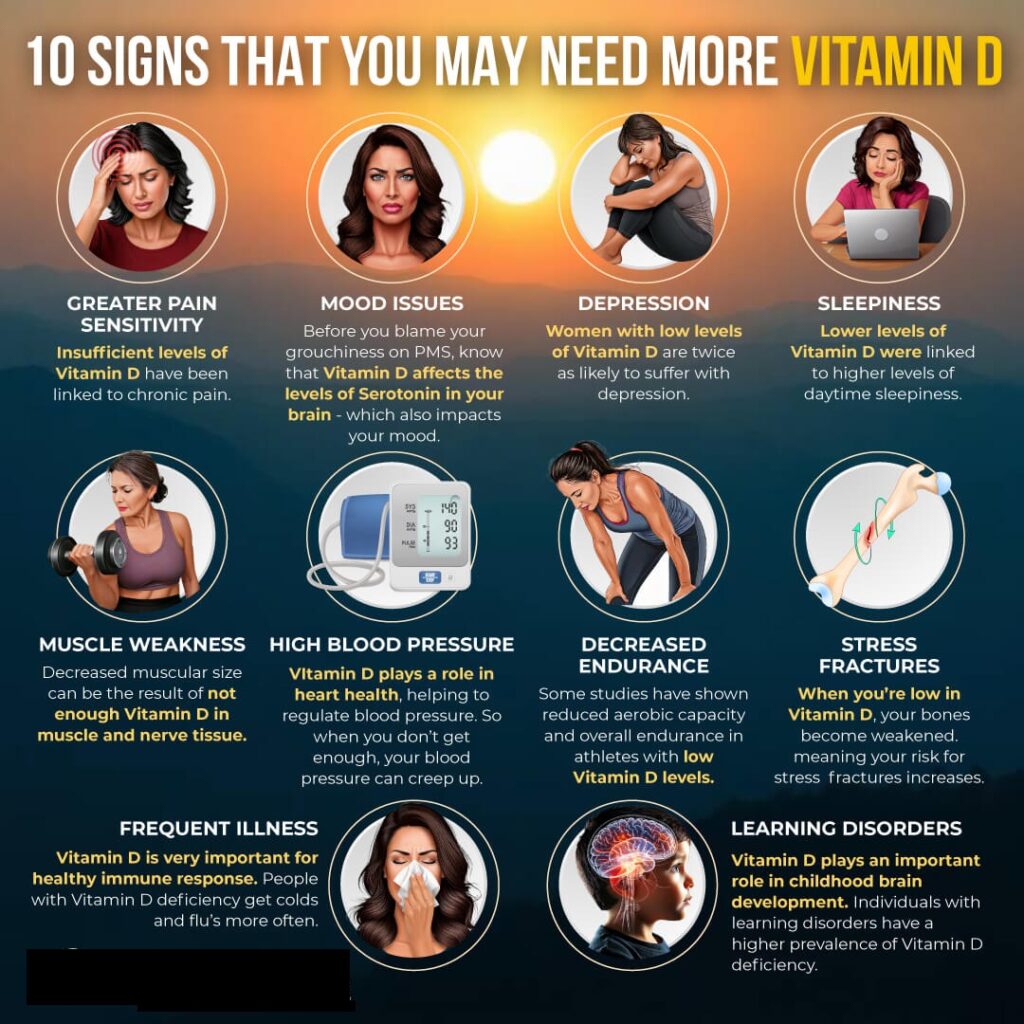
For decades, the Vitamin D story stopped at bones. But new research shows it has a vital role in nearly every system in the body, from immunity to sports performance.
1. The Immunity Booster
Vitamin D is a potent immune system modulator. Receptors for the active form of Vitamin D have been discovered in many immune cells, including those in the skin, colon, ovaries, and lymphocytes (T-cells and B-cells) [1, 9].
This means Vitamin D is directly involved in your immune response.
- It’s an “On” Switch: It is known to stimulate innate immunity, which is your body’s non-specific first line of defense. It does this, in part, by helping your body create antimicrobial peptides—compounds that can destroy bacteria [1, 9].
- It’s a “Balance” Switch: Low levels of Vitamin D are linked to an increased risk of immune disorders. This is because T-cells (a key part of your “smart” immune system) may respond to the active form of Vitamin D, which helps keep the system in balance [1, 9].
This is why Vitamin D deficiency is a leading cause of death worldwide: it is a common risk factor for respiratory tract infections [1]. A 2013 systematic review and meta-analysis confirmed that Vitamin D supplementation was effective in helping reduce the risk of respiratory tract infections [10]. While some newer meta-analyses show mixed results, a 2024 review of 12 trials still suggested a potential benefit, especially for those who are deficient to begin with [11].
2. Vitamin D and Sports Performance
Adequate levels of Vitamin D are crucial for athletes. Its precise relationship with cardiorespiratory fitness (measured as VO2 max) is a major area of research [12, 13].
- A 2018 study on 2,000 individuals found a significant positive association between serum Vitamin D levels and VO2 max [12].
- A 2012 review of sports health benefits highlighted Vitamin D’s role in reducing inflammation, pain (myopathy), and increasing muscle synthesis [13].
- A 2018 study on taekwondo athletes (who train indoors and are often deficient) found that Vitamin D supplementation contributed to more positive outcomes and reduced symptoms of upper respiratory tract infections during winter training [14].
3. The Skin Cancer & Sunscreen Paradox
This is the modern Vitamin D dilemma. We know that too much sun exposure leads to an increased risk of skin cancer [1]. Health campaigns in the 1980s rightly encouraged sunscreen use to save lives [1].
But this creates a balance issue. We need to avoid overexposure, but we need some sun exposure to produce Vitamin D. While some studies suggest a protective effect of Vitamin D on several types of cancer [15], it’s critical to get the balance right. For those who diligently use sun protection (as they should), supplementation becomes a safe and reliable way to ensure Vitamin D levels remain adequate without risking skin damage [1, 16].
🧬 How to Find the Best Vitamin D Supplement
So, how do we find the best vitamin d supplement in a sea of confusing options?
The science we’ve just reviewed gives us a clear answer. The “best” supplement isn’t just an isolated, high-dose pill. An isolated nutrient is a gamble. The “best” supplement is a synergistic formula that provides the cofactors your body needs to actually use the vitamin, or a high-quality, pure source for those with specific dietary needs.
Why the Best Vitamin D Supplement is a Complex
If you take a 10,000 IU pill of Vitamin D but are deficient in magnesium, you are not getting the benefit. Your body can’t complete the activation in the liver and kidneys1. You are paying for a nutrient you can’t use.
The “Evidence First” solution is a supplement that includes the entire team.
The NeoLife “Evidence First” Solutions
This philosophy is the foundation of NeoLife’s products. We don’t just provide isolated nutrients; we provide complete, synergistic solutions based on whole-food science.
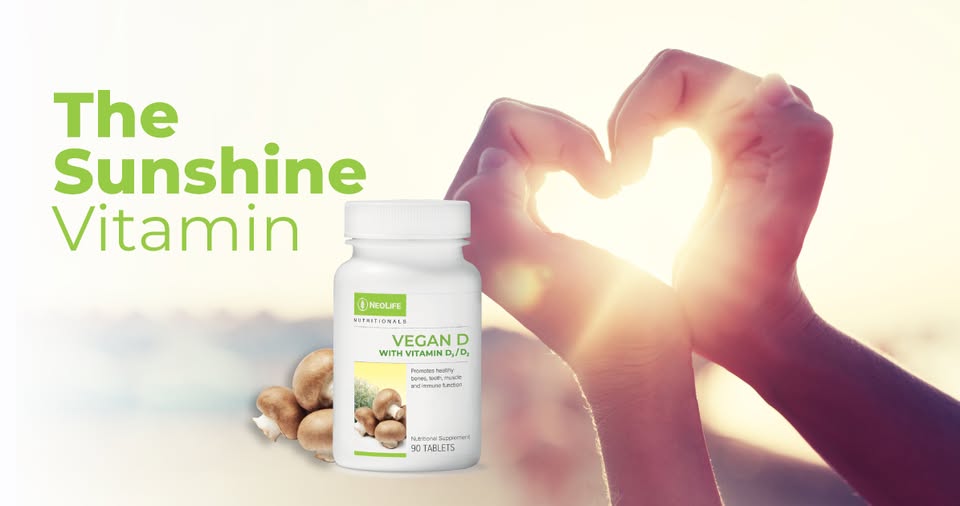
1. The High-Potency Vegan Solution: NeoLife Vegan D
For those with specific dietary needs or who need a higher-potency dose, this is the superior choice. Our Vegan D is a proprietary blend of 100% naturally sourced, whole-food-based ingredients.

- Potent 1,000 IU Dose: Delivers 25 mcg (1,000 IU) of Vitamin D in every tablet.
- 100% Vegan D3 from Lichen: Features a unique, naturally sourced Vitamin D3 from Reindeer Lichen (Cladina rangiferina), a plant source traditionally consumed in arctic countries.
- Mushroom-Sourced D2: Contains Vitamin D2 from superior quality mushrooms (Agaricus bisporus).
- Immune-Boosting Co-Factors: These mushrooms also provide valuable whole-food beta-glucans, which are known to be of particular benefit for the immune system.
2. Synergistic & Foundational Solutions
Supplementation can help ensure that we obtain adequate levels of Vitamin D on a regular basis. NeoLife offers a range of products that provide this key nutrient as part of a complete, synergistic formula.
| Product | Dosage | Key Features (with Vitamin D) |
| Chelated Cal-Mag | 3 tablets daily | Vitamin D, 500 IU. Provides highly bioavailable calcium and magnesium, chelated with glycine to help achieve higher absorption. This is the complete “trio” for bone health. |
| Pro Vitality | 1 sachet daily | Vitamin D, 200 IU. A “health pack” of four supplements: Tre-en-en, Carotenoid Complex, Omega-3 Plus, and an Essential Vitamin & Mineral complex to support broad nutritional needs. |
| Formula IV Plus | 1 sachet daily | Vitamin D, 200 IU. A unique multi-factor whole-food supplement with vitamins, minerals, lipids & sterols, and enzymes. Also includes additional mineral support from selenium, chromium, and molybdenum. |
| Formula IV | 2 capsules daily | Vitamin D, 200 IU. A multi-factor food supplement providing vitamins, minerals, lipids & sterols (Tre-en-en), and selected enzymes to bridge dietary gaps. |
| NeoLifeShake | 2 scoops daily | Vitamin D, 140 IU. Biologically complete with all 22 amino acids. Provides 25 vitamins and minerals, 5g of fiber, and uses a low-temperature Protogard Process to maximize nutritional value. |
| NeoLifeShake (Nutrishake) | 2 heaped scoops | Vitamin D, 200 IU. Biologically complete with all 22 amino acids. Provides 14 vitamins and minerals and 0.4g of fiber. Uses the Protogard Process to protect nutritional value. |
🩺 Science Over Shelf Hype
Most $15 drugstore “Vitamin D” pills are simple, isolated D3. They don’t address the critical “cofactor” problem—that Vitamin D is useless without sufficient Magnesium to activate it2. Many are also sourced from lanolin (sheep’s wool), making them unsuitable for vegans.
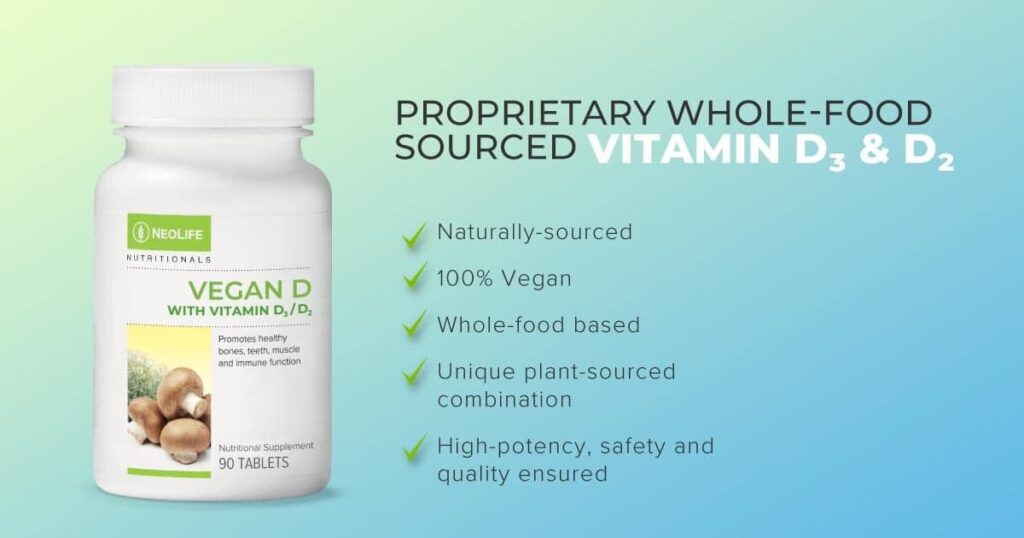
NeoLife’s Vitamin D solutions are different. They are a complete, synergistic system. Our formulas are whole-food based, clinically validated, and made to pharmaceutical-grade standards. We offer both a high-potency, 100% Vegan D from lichen and mushrooms and a synergistic Chelated Cal-Mag with D3.
If you’re done gambling with isolated nutrients, start choosing real nutrition your body recognizes.
👉 Explore NeoLife’s Vitamin D Solutions — including the high-potency Vegan D and the synergistic Chelated Cal-Mag — where purity meets clinical proof.
🔗 Related Reading-Keep Learning
- The Latest in Women’s Health and Nutrition: A Science-Backed Guide.
- From “Insurance” to “Investment”: The New Science of Multivitamins and Memory.
- How Phytonutrient Science Helps Maintain Healthy Blood Sugar Balance Naturally.
- What Are Flavonoids and Polyphenols? A Guide to the Science of Whole-Food Antioxidants.
- A Foundation for Life: Why Children’s Nutrition Matters More Than You Think.
References
- Sassi, F., Tamone, C., & D’Amelio, P. (2018). Vitamin D: Nutrient, Hormone, and Immunomodulator. Nutrients, 10(11), 1656.
- van Schoor, N., & Lips, P. (2018). Worldwide Vitamin D Status. Vitamin D (Fourth Edition), 15-40.
- Nair, R., & Maseeh, A. (2012). Vitamin D: The “sunshine” vitamin. Journal of Pharmacology & Pharmacotherapeutics, 3(2), 118-126.
- DeLuca, HF. (2004). Overview of general physiologic features and functions of vitamin D. The American Journal of Clinical Nutrition, 80(6), 1689S-1696S.
- Institute of Medicine (US) Committee to Review Dietary Reference Intakes for Vitamin D and Calcium. (2011). Dietary Reference Intakes for Calcium and Vitamin D. National Academies Press (US).
- Rosanoff, A., Dai, Q., & Shapses, SA. (2016). Essential nutrient interactions: does low or suboptimal magnesium status interact with vitamin D and/or calcium status?. The American Journal of Clinical Nutrition, 103(6), 1545-1552.
- Shakoor, H., et al. (2024). The Importance of Vitamin D and Magnesium in Athletes. Nutrients, 17(10), 1655.
- Volpe, SL. (2023). Combined vitamin D and magnesium supplementation does not influence markers of bone turnover or glycemic control: A randomized controlled clinical trial. Nutrition Research, 110, 33-43.
- Lucas, RM., Gorman, S., Geldenhuys, S., & Hart, PH. (2014). Vitamin D and immunity. F1000Prime Reports, 6, 118.
- Bergman, P., Lindh, AU., Björkhem-Bergman, L., & Lindh, JD. (2013). Vitamin D and respiratory tract infections: a systematic review and meta-analysis of randomized controlled trials. PLoS ONE, 8(6), e65835.
- Li, Y., et al. (2024). Vitamin D supplementation for prevention of acute respiratory infections in older adults: A systematic review and meta-analysis. Frontiers in Public Health, 12, 1375368.
- Marawan, A., Kurbanova, N., & Qayyum, R. (2018). Association between serum vitamin D levels and cardiorespiratory fitness in the adult population of the USA. JACC: Heart Failure, 6(9), 754-760.
- Shuler, FD., Wingate, MK., Moore, GH., & Giangarra, C. (2012). Sports Health Benefits of Vitamin D. Sports Health, 4(6), 496-501.
- Jung, HC., Seo, M-W., Lee, S., Kim, SW., & Song, JK. (2018). Vitamin D3 supplementation reduces the symptoms of upper respiratory tract infection during winter training in vitamin D-insufficient taekwondo athletes: a randomized controlled trial. International Journal of Environmental Research and Public Health, 15(9), 2003.
- National Cancer Institute. (2013). Vitamin D and Cancer Prevention.
- Pilz, S., März, W., Cashman, KD., et al. (2018). Rationale and plan for vitamin D food fortification: a review and guidance paper. Frontiers in Endocrinology, 9, 373.
- Jahnen-Dechent, W., & Ketteler, M. (2012). Magnesium basics. Clinical Kidney Journal, 5(Suppl 1), i3-i14.
- Dai, Q., Zhu, X., Manson, JE., et al. (2018). Magnesium status and supplementation influence vitamin D status and metabolism: results from a randomized trial. The American Journal of Clinical Nutrition, 108(6), 1249-1258.
- Jolliffe, DA., & Martineau, AR. (2023). Vitamin D supplementation and respiratory infections: A systematic review and meta-analysis of individual participant data. Nutrients, 15(2), 345.
- Uwitonze, AM., & Razzaque, MS. (2018). Role of Magnesium in Vitamin D Activation and Function. The Journal of the American Osteopathic Association, 118(3), 181–189.
- Reddy, P., & Edwards, LR. (2019). Magnesium Supplementation in Vitamin D Deficiency. American Journal of Therapeutics, 26(1), e124–e132.
- Deng, X., et al. (2024). The effects of magnesium and vitamin D/E co-supplementation on inflammation markers and lipid metabolism of obese/overweight population: a systematic review and meta-analysis. Frontiers in Nutrition, 11.


Pingback: What Vitamins Should I Take? An Evidence-Based Guide to Choosing Right