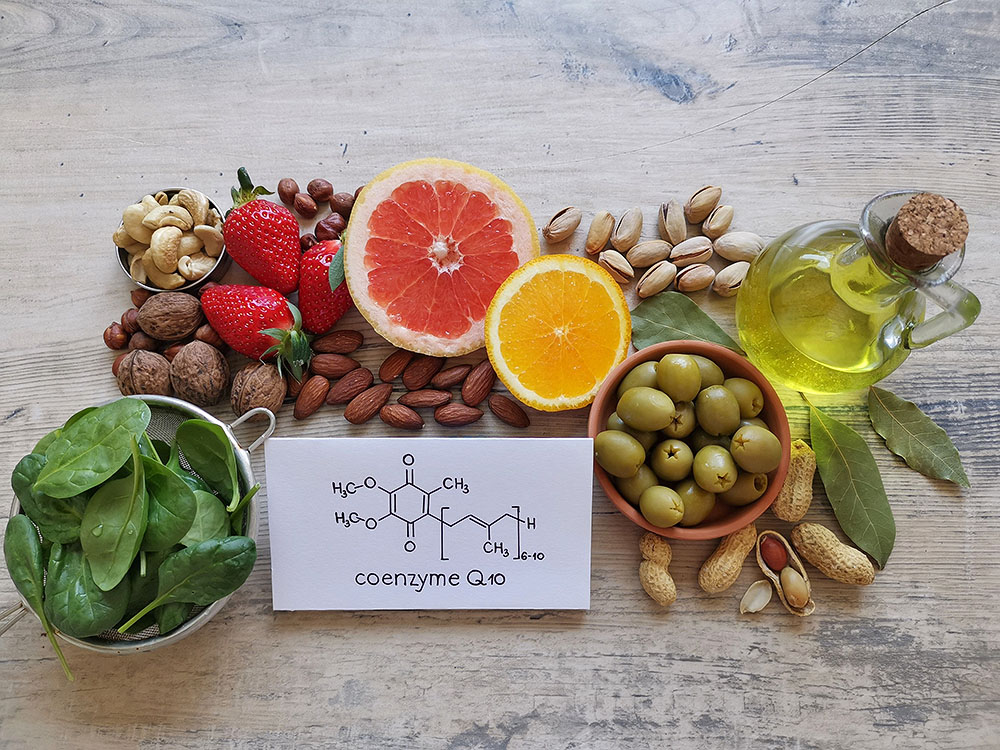
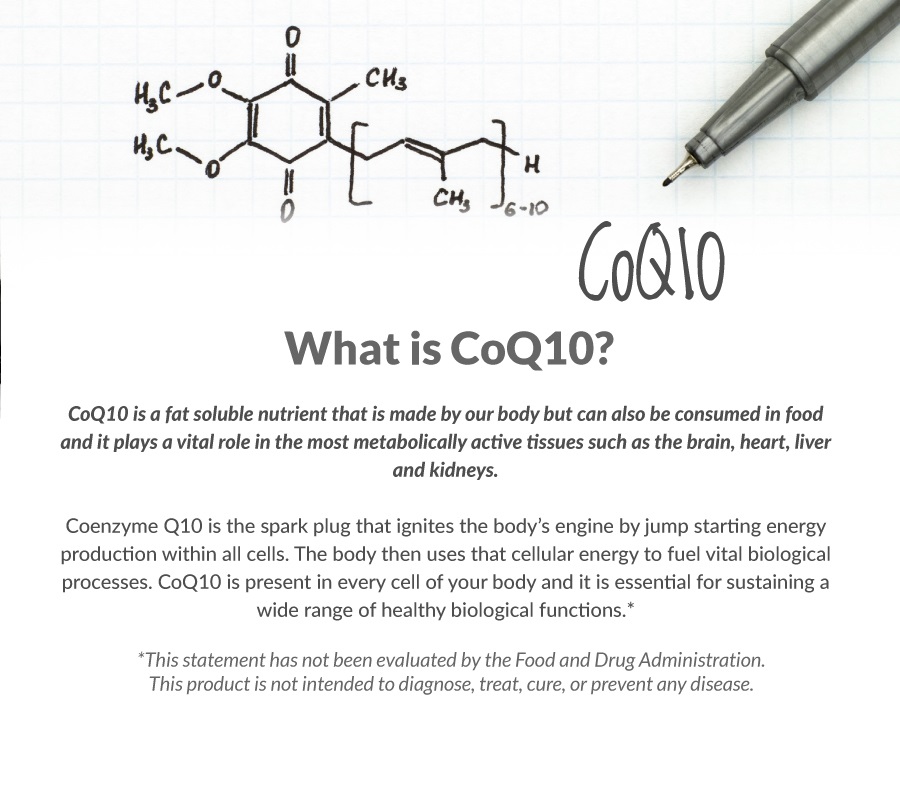
What is Coenzyme Q10? This is one of the most critical questions in cellular health, as this molecule is the essential “spark plug” for your cells.
Coenzyme Q10 (CoQ10) is a vitamin-like, fat-soluble compound found in virtually every cell of every living thing [1]. It is not an optional nutrient; it is an obligatory component for human life, so essential that your body synthesizes it endogenously.
Its importance is defined by two primary functions that are tightly linked [2]:
- Bioenergetics (The “Spark Plug”): CoQ10 is an indispensable part of the mitochondrial electron transport chain, the complex cellular machinery that produces adenosine triphosphate (ATP), the primary energy currency of your body [2].
- Antioxidant Defense (The “Shield”): In its reduced form (ubiquinol), CoQ10 is the body’s primary endogenously synthesized lipid-soluble antioxidant, protecting cell membranes and DNA from oxidative damage [2].
These two roles create a powerful feedback loop. High-energy organs like the heart and brain are packed with mitochondria, and during many diseases, CoQ10 is taken up in large doses by these tissues [3]. When these organs are under stress, they require more CoQ10 to produce ATP. This high metabolic demand can lead to “electron leak,” which creates a surge of oxidative stress. This stress, in turn, consumes the available CoQ10, leading to a vicious cycle of energy starvation and cellular damage [2].
This explains why significantly decreased levels of CoQ10 are noted in a wide variety of diseases [3]. But the two biggest drivers of deficiency are not disease—they are aging and one of the most commonly prescribed medications in the world.
🔬 The Great Depletion: Why Are We Deficient?
Our bodies are designed to make CoQ10, but this production doesn’t last forever. A CoQ10 deficiency can be caused by insufficient dietary intake, an impairment in its biosynthesis, or excessive use by the body [3].
The Aging Factor
Endogenous production of CoQ10 slows dramatically as we age. This is not a minor drop; research shows our natural levels can decline by more than 50% by age 50 [1]. This natural decline means our cellular “spark plugs” are getting weaker just as our bodies are becoming more susceptible to age-related stress.
The Statin Problem (and Other Drugs)
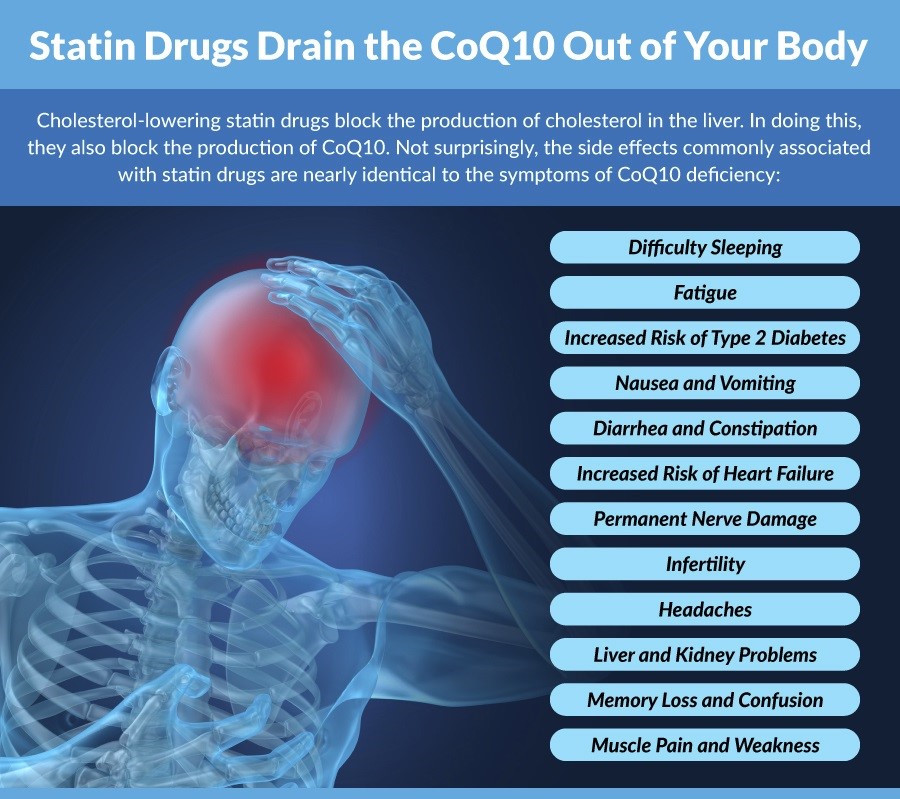
The second, more immediate driver of CoQ10 deficiency is pharmacological. Cholesterol-lowering statin drugs drain the CoQ10 out of your body [2, 4].
This is not a “potential side effect”—it is an unavoidable biochemical fact.
Your body produces both Cholesterol and CoQ10 from the same pathway: the mevalonate pathway. Statins (HMG-CoA reductase inhibitors) are designed to block an enzyme in this pathway to stop cholesterol production. In doing so, they unavoidably also inhibit your body’s ability to synthesize CoQ10 [2].
Not surprisingly, the most common side effects of statin drugs are nearly identical to the symptoms of a severe CoQ10 deficiency [4, 5]:
- Muscle Pain and Weakness
- Fatigue
- Memory Loss and Confusion
- Increased Risk of Heart Failure
- Increased Risk of Type 2 Diabetes
- Permanent Nerve Damage
- Liver and Kidney Problems
- Headaches
- Difficulty Sleeping
This is why many health experts now argue: If you must take a statin drug, you MUST take CoQ10 [4, 5]. But statins aren’t the only culprits. Other common medications that can deplete CoQ10 include tricyclic antidepressants, beta-blockers, thiazide diuretics, and antidiabetic medications [5].
💡 The Great Myth: Ubiquinone vs. Ubiquinol
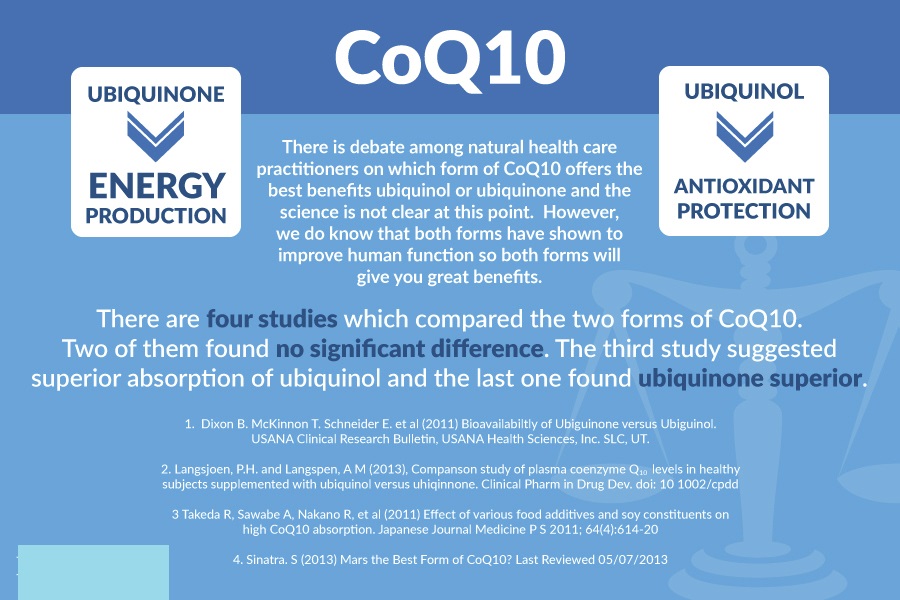
For anyone seeking to supplement CoQ10, the first question they face is a confusing one: “Should I take Ubiquinone or Ubiquinol?”
- Ubiquinone is the oxidized form, essential for its “spark plug” role in ATP energy production [2, 6].
- Ubiquinol is the reduced form, which functions as the “shield” for antioxidant protection [2, 6].
Marketing claims for ubiquinol (the more expensive form) often state it has “superior bioavailability.” A critical review of the science suggests this is, at best, a “misleading marketing” tactic [2].
Here is what the biochemistry shows:
- It All Converts Anyway: Ubiquinol is highly unstable and is readily oxidized back to ubiquinone by the acid in your stomach [2].
- The Body Decides: Regardless of which form you ingest, your body maintains its own “redox cycle” [2]. It absorbs the CoQ10 and transports it in the blood primarily as ubiquinol (the antioxidant form), converting between the two forms as needed [2].
- The Studies are Mixed: While some studies show a modest advantage for ubiquinol, four key studies comparing the two forms found conflicting results: two found no significant difference, one found ubiquinol superior, and one found ubiquinone superior [6, 7, 8].
This entire debate obscures the true rate-limiting step for CoQ10 absorption: formulation.
CoQ10 is a crystalline powder. These crystals are large, “extremely hydrophobic” (they repel water), and do not dissolve well in the gut [2]. The real key to absorption is not the form (ubiquinone vs. ubiquinol), but how well the supplement breaks down these crystals [2].
This problem of bioavailability is the single biggest reason why so many CoQ10 studies show conflicting results.
🩺 What is Coenzyme Q10’s Real Clinical Evidence? (A Review of Human Trials)
Because of the bioavailability problem, the CoQ10 clinical literature is notoriously “noisy.” However, when we focus on high-quality, long-term human trials that used an adequate, bioavailable dose, a clear picture of efficacy emerges.
WIN: Congestive Heart Failure (CHF)
The evidence here is strong and positive. The heart is the most energy-demanding organ, and patients with CHF have been shown to have depleted CoQ10 levels, providing a clear “bioenergetic starvation” rationale [2, 9].
The landmark trial is the Q-SYMBIO study [2, 9].
- Design: A multicenter, randomized, double-blind, placebo-controlled trial following 420 patients with chronic heart failure for two years.
- Dose: 300 mg/day (100 mg, 3x/day) of Ubiquinone (not ubiquinol) on top of standard therapy.
- Results: The outcomes were profound [2]. The CoQ10 group saw a:
- 44% reduction in all-cause mortality
- 43.8% reduction in cardiovascular mortality
- Significant reduction in hospitalizations for heart failure
This study, along with others, suggests CoQ10 is a safe and effective adjunctive therapy for heart failure [2, 9]. It is critical to note that this landmark trial’s success was achieved with ubiquinone, providing the strongest evidence that formulation, not redox state, is the key variable [2].
MODERATE WIN: Hypertension
The evidence is consistent. A recent (2025) comprehensive meta-analysis of 45 randomized controlled trials (RCTs) found that CoQ10 supplementation produced a statistically significant reduction in systolic blood pressure (SBP) by an average of -3.44 mmHg [2]. The effect on diastolic blood pressure was not significant. It appears to be a safe, adjunctive therapy for modestly lowering systolic BP in hypertensive patients [2].
MODERATE WIN: Migraine Prophylaxis
The rationale is that migraine is a disorder of brain bioenergetics. The evidence from multiple meta-analyses is clear and consistent: CoQ10 works as a prophylactic (preventative), but not as an acute treatment [2, 5].
- It significantly reduces the frequency of migraine attacks.
- It significantly reduces the duration of attacks.
- It does NOT reduce the severity or pain of an attack already in progress.
THE GRIDLOCK: Statin-Induced Myopathy (SAMS)
This is the most contentious area of CoQ10 research, in a state of “irreconcilable gridlock” [2]. The biochemical rationale is undisputed: statins deplete CoQ10, and this is the likely cause of the muscle pain, weakness, and fatigue.
But the clinical trials are split.
- The Case FOR: A 2018 meta-analysis in the Journal of the American Heart Association (JAHA) concluded CoQ10 significantly ameliorated statin-associated muscle pain, weakness, and cramps [10].
- The Case AGAINST: A 2015 meta-analysis in Mayo Clinic Proceedings and a 2024 abstract in Circulation found CoQ10 had no significant effect on muscle pain [11, 12].
This gridlock is the “smoking gun” for the bioavailability problem. It is highly likely that these meta-analyses are unknowingly pooling “failed” studies (that used non-bioavailable, cheap crystalline CoQ10) with “successful” ones (that used a properly solubilized formula), resulting in a contradictory average [2].
DEFINITIVE FAIL: Parkinson’s Disease
This is a clear case of “bench-to-bedside” failure. Despite promising early-phase studies in animals and small human groups, a large-scale Phase III trial was stopped early for futility, showing no clinical benefit in slowing the progression of Parkinson’s [2, 5, 13].
EMERGING EVIDENCE: Other Conditions
- Ulcerative Colitis (UC): A 2021 RCT on 86 patients with mild to moderate UC found that 200 mg/day of CoQ10 for 8 weeks significantly improved quality of life (IBDQ-32 score) and clinical disease activity (SCCAI score) [14].
- Pre-eclampsia: A 2020 clinical article found that CoQ10 supplementation during pregnancy reduces the risk of pre-eclampsia [15].
- Neuroprotection: Animal studies show that oral CoQ10 administration increases brain mitochondrial concentrations and exerts neuroprotective effects [16].
- Gum Disease & Fertility: Preliminary evidence suggests CoQ10 may help with periodontal (gum) disease and may improve fertility in both males and females [5].
🧬 The Solution: A Synergistic Complex, Not Just a Nutrient
Given the science, how do you choose a CoQ10 supplement you can trust? The market is flooded with synthetic, poorly absorbed products. You must ask three questions:
- Is it sourced from nature?
- Is it formulated synergistically with “partner nutrients”?
- Is it from a company with a proven track record of quality and integrity? [17]
This is the entire philosophy behind NeoLife’s CoQ10 Mitochondrial Energy Complex. It was designed by the Scientific Advisory Board (SAB) not just to replace CoQ10, but to support the entire cellular energy production system [1].
Here is the “NeoLife Difference” in every dose:
- The Right Form & Dose: It delivers 100mg of pharmaceutical-grade Ubiquinone. This is the exact form and a clinically relevant dose used in the successful Q-SYMBIO heart failure trial [1, 2].
- Enhanced Bioavailability: The formula is not a dry, synthetic crystal. It is a highly bioavailable form combined with sunflower lecithin, coconut MCT oil, and rice bran oil—key ingredients that help support CoQ10 absorption [1].
- A Synergistic Complex (The “Partner Nutrients”):
- Exclusive Mitogenic Phyto-Lipid & Sterol Blend: This is a proprietary blend of whole-grain lipids and sterols (from rice bran and soya) known to help support optimal mitochondrial structure and function [1].
- L-Cysteine: This is the “rate-limiting” amino acid your body needs to produce its own “master antioxidant,” glutathione, strengthening the cell’s internal protective systems [1].
- Proprietary Polyphenol Blend: Includes resveratrol from red grapes to provide extra antioxidant protection for the mitochondria [1].
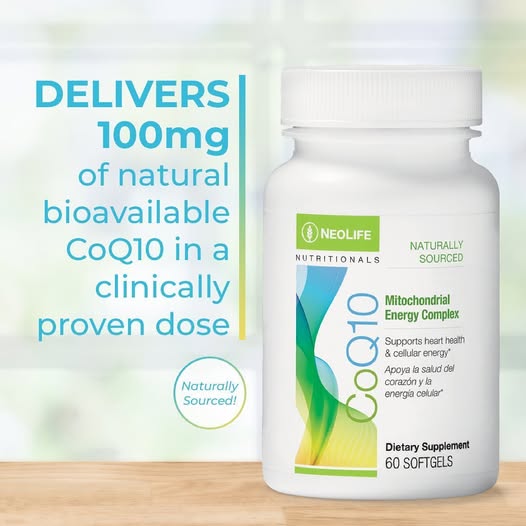
This isn’t just a CoQ10 pill. It is a complete, traceable, whole-food-based complex formulated to address energy and health at the cellular level.
🩺 Science Over Shelf Hype
Most $15 drugstore CoQ10 pills are synthetic, use a cheap crystalline powder with no proven bioavailability, and hide behind the “ubiquinol” marketing myth.
NeoLife’s CoQ10 is different. It is a pharmaceutical-grade source of Ubiquinone—the form clinically proven in the landmark Q-SYMBIO heart failure trial. It’s formulated as a complete Mitochondrial Energy Complex, combining CoQ10 with a synergistic, bioavailable blend of whole-food lipids, sterols, polyphenols, and the glutathione precursor L-cysteine.
If you’re done gambling with generic bottles, start choosing real nutrition your body recognizes.
👉 Explore NeoLife’s CoQ10 Mitochondrial Energy Complex — a traceable, synergistic, and clinically-relevant dose, where purity meets performance.
🔗 Also read:
- [What is Cellular Nutrition? A Guide to Your Cell Membrane & Energy]
- [The Clean Supplement Quality Difference]
- The Ultimate Guide to Mitochondrial Health: Your Cellular Powerhouses Explained.
- Moving to the (Heart) Beat: A Guide to Your Cardiovascular Health System.
References
- Dixon B, McKinnon T, Schneider E, et al. (2011) Bioavailability of Ubiquinone versus Ubiquinol. USANA Clinical Research Bulletin, USANA Health Sciences, Inc. SLC, UT.
- Takeda R, Sawabe A, Nakano R, et al (2011). Effect of various food additives and soy constituents on high CoQ10 absorption. Japanese Journal Medicine P S 2011; 64(4):614-20.
- Mortensen SA, Rosenfeldt F, Kumar A, et al. The Q-SYMBIO Study: Effect of coenzyme Q10 on morbidity and mortality in chronic heart failure: results from Q-SYMBIO: a randomized double-blind trial. JACC Heart Fail. 2014;2(6):641-9.
- Qu H, Guo M, Chai H, et al. Effects of Coenzyme Q10 on Statin-Induced Myopathy: An Updated Meta-Analysis of Randomized Controlled Trials. J Am Heart Assoc. 2018;7(19):e009835.
- Taylor BA, Lorson L, White CM, et al. A randomized trial of coenzyme Q10 in patients with confirmed statin myopathy. Mayo Clin Proc. 2015;90(3):307-14.
- Nguyen T, et al. Coenzyme Q10 Supplementation and its Impact on Statin-Related Myopathic Pain. Circulation. 2024;150:A15915.
- Beal MF, et al. A randomized, double-blind, placebo-controlled trial of coenzyme Q10 and remacemide in HDS. Neurology. 2002 Jul 23;59(2):168-73. (Note: This is a representative Phase II, the Phase III trial is: Beethoven, et al. JAMA Neurol. 2014).
- Farsi F, Ebrahimi-Daryani N, Barati M, et al. Effects of coenzyme Q10 on health-related quality of life, clinical disease activity and blood pressure in patients with mild to moderate ulcerative colitis: a randomized clinical trial. Med J Islam Repub Iran. 2021;35:3.
- Teran E, Hernandez I, Nieto B, et al. Coenzyme Q10 supplementation during pregnancy reduces the risk of pre-eclampsia. Int J Gynaecol Obstet. 2009 Apr;105(1):43-5.
- Matthews RT, Yang L, Browne S, et al. Coenzyme Q10 administration increases brain mitochondrial concentrations and exerts neuroprotective effects. Proc Natl Acad Sci U S A. 1998;95(15):8892-7.