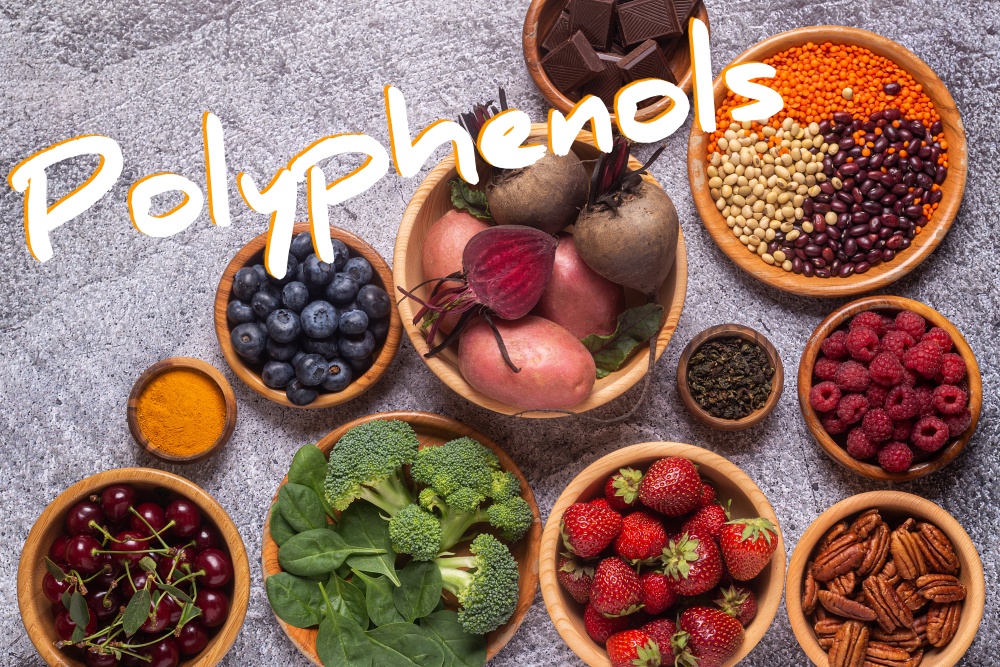
What are flavonoids and polyphenols? They are the “secret” nutrients found in the colorful fruits and vegetables that science has identified as critical for long-term health. But in our modern world, these vital compounds have been stripped from our diets.
Over the last 50 years, whole foods have been replaced by processed foods, tipping the scales toward chronic disease. This post explores the science of these powerful antioxidants, why they are critical for your health, and how to ensure you’re getting enough.
We are told to “eat the rainbow,” but what does that actually mean? What are these compounds, and what do they do? This post explores the science of what are flavonoids and polyphenols, why they are critical for your health, and how to ensure you’re getting enough.
🔬 The Science: What Are Flavonoids and Polyphenols?
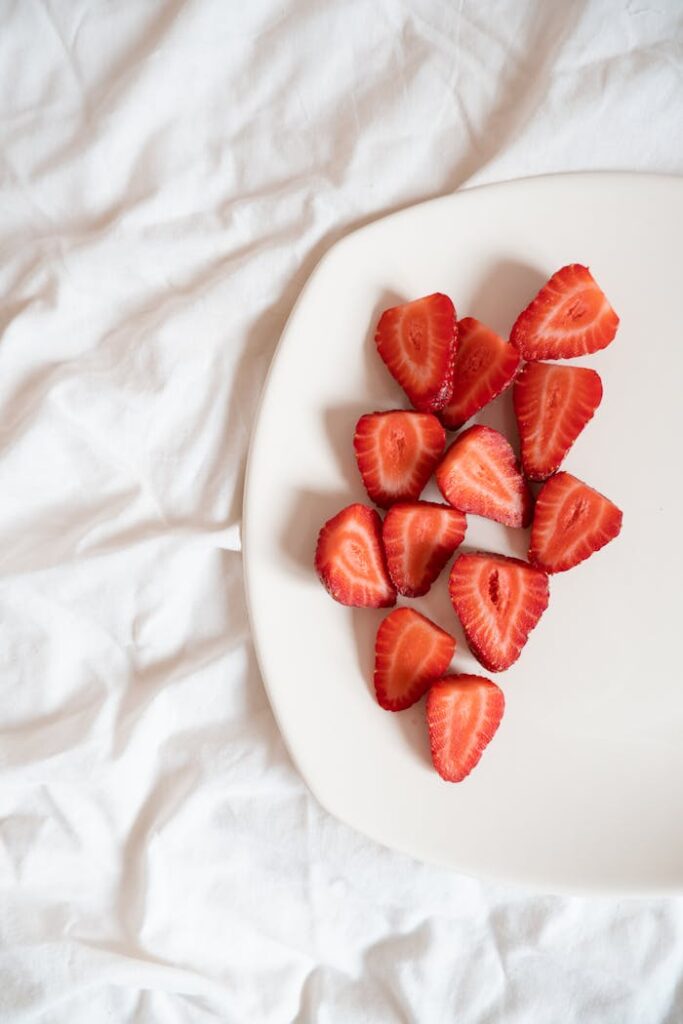
Polyphenols are a large family of phytonutrients (plant nutrients) that act as potent, water-soluble antioxidants. Flavonoids are a specific class of polyphenols and are responsible for the brilliant, deep colors in fruits and vegetables—the brilliant blues, purples, and greens, as well as the yellows and reds that can’t be attributed to carotenoids.
Research has long linked diets abundant in these foods to reduced risks for our overall well-being. They work in ways distinct from other nutrients, protecting our body fluids (like blood) from oxidative damage.
But their benefits go far beyond simple antioxidant protection.
💡 The Insight: What Do Polyphenols Actually Do?
When you “eat the rainbow,” you’re consuming a powerful blend of bioactive compounds that have been clinically shown to impact everything from your brain to your blood sugar.
1. They May Delay Cognitive Aging
New research on flavonoids and cognitive health is stunning.
- Berries & Brain Health: A massive prospective study of 16,010 women published in the Annals of Neurology found that a higher long-term intake of berries (rich in a flavonoid subclass called anthocyanidins) was associated with slower rates of cognitive decline. The researchers estimated the benefit was equivalent to delaying cognitive aging by up to 2.5 years.
- Green Tea & Brain Activity: A 2012 study used functional MRI (fMRI) to see what green tea extract actually does to the brain. The results showed that it increased activation in the dorsolateral prefrontal cortex (DLPFC), a key area of the brain that mediates working memory.
2. They Help Balance Blood Sugar
A high-sugar meal causes a dangerous “spike” in blood glucose. Polyphenols, especially from berries, have been shown to help control this. A 2010 study in the British Journal of Nutrition gave healthy subjects a 150g berry purée sweetened with sucrose. The results showed that the berry meal significantly decreased the post-prandial (after-eating) glucose response at 15 and 30 minutes, effectively blunting the sugar spike.
3. They Support Heart Health & Fight Inflammation
Chronic inflammation is a key driver of cardiovascular disease.
- Lowering Inflammation: A 2011 study from Harvard researchers on the Nurses’ Health Study cohort found that women with the highest intakes of specific flavonoid subclasses (like flavones and flavanones) had modestly lower concentrations of key inflammatory biomarkers in their blood.
- Reducing Stroke Risk: A 2012 study in the journal Stroke followed 31,035 women and looked at their “Total Antioxidant Capacity” (TAC). It found that a high-TAC diet was inversely associated with the risk of total stroke.
4. They Impact Fat Cells and Insulin Sensitivity
Polyphenols may even play a role in metabolic health by influencing how our body handles fat and insulin.
- Fat Cell Formation: A study from Texas Women’s University found that blueberry polyphenols can suppress adipogenesis—the process of creating new fat cells.
- Insulin Sensitivity: The red-grape polyphenol resveratrol was studied in 19 type 2 diabetic patients. In just 4 weeks, a daily 10mg dose of resveratrol brought a significant reduction in insulin resistance.
🧬 The Solution: A Science-Backed Strategy to Fill the Gap
The science is clear: we need a broad spectrum of these “rainbow” nutrients. The problem is that very few people eat the 5-13 servings of fruits and vegetables required to get them all.
NeoLife’s “Evidence First” approach provides two distinct, whole-food solutions.
1. Flavonoid Complex: The Broad-Spectrum Defense
This is the foundational, broad-spectrum solution. Unlike generic “antioxidant” pills, Flavonoid Complex is a whole-food supplement containing flavonoids representative of all six classes as they naturally occur in the human food chain: flavones, flavanols, flavanones, anthocyanins, and catechins.
Its exclusive blend is derived from:
- Berries: Cranberries, Elderberries, Red & Black Grapes
- Vegetables: Kale and Beets
- Tea: Decaffeinated Green Tea Extract
- Citrus: Oranges, Lemons, and Grapefruit
- Specialty Nutrients: It also includes Ellagic Acid, a potent phytonutrient closely related to flavonoids.
The NeoLife Proof: In a NeoLife-sponsored in-vitro study at the Southern Research Institute, the active blend in Flavonoid Complex was tested on human breast cancer cells (MCF7). The study demonstrated that the blend strongly inhibits the growth of these cancer cells.
2. Tré: The Potent Bioactive Essence
Tré is not just juice; it’s a potent “bioactive nutritional essence”. It’s a liquid formula designed to deliver a massive serving of the most powerful “super fruits” in a form your body can use.
Its foundation is a blend of Pomegranate, Acai Berry, and Green Tea. This is combined with a proprietary Inflox Berry Blend (including blueberry, elderberry, and cranberry) and is further enhanced with two of the most studied anti-aging antioxidants: Resveratrol and Alpha-Lipoic Acid.
The NeoLife Potency: Because Tré uses pure extracts and concentrates, its potency is unmatched. Ounce-for-ounce, it delivers:
- 20 TIMES the punicalagins of fresh pomegranate juice
- 5-10 TIMES the resveratrol of fine red wine
- 7 TIMES the antioxidant power of ripe red tomatoes
- 6 TIMES the alpha-lipoic acid of fresh spinach
It is also naturally sweetened with agave nectar for a low glycemic response.
🩺 Science Over Shelf Hype
Most $15 drugstore “antioxidant” pills rely on a single, synthetic ingredient (like Vitamin C) or low-grade “berry blends” with no proof of potency.
NeoLife’s Phytonutrient Range is different — whole-food based, clinically validated, and made to pharmaceutical-grade standards. Each formula is traceable from farm to capsule, with proven bioavailability in human studies.
If you’re done gambling with generic bottles, start choosing real nutrition your body recognizes.
👉 Explore NeoLife’s Phytonutrient Range — featuring Flavonoid Complex and Tré — scientifically formulated to deliver nature’s most powerful antioxidant defense.
🔗 Further Reading: Keep Learning
- Omega-3 and Carotenoids for Eye Health: The Science of Vision Protection
- What is Cellular Nutrition? A Guide to Your Cell Membrane & Energy.
- The Ultimate Guide to Mitochondrial Health: Your Cellular Powerhouses Explained.
- How Phytonutrient Science Helps Maintain Healthy Blood Sugar Balance Naturally.
References
- Block, G. Dietary Guidelines and the Results of Food Consumption Surveys. Am. J. Clin. Nutr. 53:356S-357S (1991).
- Helser, M.A., Hotchkiss, J.H. and Roe, D.A. Influence of Fruit and Vegetable Juices on the Endogenous Formation of N-nitrosoproline and N-nitrosothiazolidine-4-carboxylic Acid in Humans on Controlled Diets. Carcinogenesis 13:2277-2280 (1992).
- Kandaswami, C., Perkins, E. Ascorbic Acid Enhanced Antiproliferative Effect of Flavonoids on Squamous Cell Carcinoma in Vitro. Anticancer Drugs 4:91-96 (1993).
- Green Tea Catechin Extract Symposium (video). Sponsored by Chemco Industries Inc.
- In Vitro Prescreening of Cruciferous and Flavonoid Blend Extracts using Chemoprevention Associated Biochemical Markers of the Carcinogenic Process. Southern Research Institute (SRI). Report #1, Sept 6, 1996.
- Carter P, et al. Fruit and vegetable intake and incidence of type 2 diabetes mellitus: systematic review and meta-analysis. BMJ. 2010 Aug 18:341:c4229.
- Cassidy A, et al. Habitual intake of flavonoid subclasses and incident hypertension in adults. Am J Clin Nutr. 2011 Feb; 93(2): 338-347.
- Törrönen R, et al. Berries modify the postprandial plasma glucose response to sucrose in healthy subjects. Br J Nutr. 2010 Apr;103(8):1094-7.
- Landberg R, et al. Select dietary flavonoids are associated with markers of inflammation and endothelial dysfunction in US women. Journal of nutrition, April 2011.
- Borgwardt S et. al. Neural effects of green tea extract on dorsolateral prefrontal cortex. Eur J Clin Nutr. 2012:66(11):1187-92.
- Devore EE, Kang JH, Breteler MM, Grodstein F. Dietary intakes of berries and flavonoids in relation to cognitive decline. Ann Neurol. 2012:72(1):135-43.
- Kennedy DO et al. Effects of high-dose B vitamin complex with vitamin C and minerals on subjective mood and performance in healthy males. Psychopharmacol 211:55-68, 2010.
- Miller MG, Shukitt-Hale B. Berry fruit enhances beneficial signaling in the brain. J. Agric. Food Chem., 2012, 60 (23): 5709-5715.
- Park SK, et al. A combination of green tea extract and L-theanine improve memory and attention in subjects with mild cognitive impairment: A double blind placebo controlled study. Journal of Medicinal Foods, 2011; 14(4): 334-343.
- Rautiainen S, Larsson S, Virtamo J, Wolk A. Total antioxidant capacity of diet and risk of stroke: a population-based prospective cohort of women. Stroke 2012;43(2):335-40.
- Rushworth JV et. al. Prion protein-mediated neurotoxicity of amyloid-ẞ oligomers requires lipid rafts and the transmembrane LRP1. Journal of Biological Chemistry 2013:288: 8935-8951.
- Age-Related Eye Disease Study Research Group. A randomized, placebo-controlled, clinical trial of high-dose supplementation with vitamins C and E, beta carotene, and zinc for age-related macular degeneration and vision loss: AREDS report no. 8. Arch Ophth.
- Rautiainen S et al. Multivitamin use and the risk of myocardial infarction: a population-based cohort of Swedish women. Am J Clin Nutr. 95:1251-6, 2010.
- Dickinson A, et al. Physicians and nurses use and recommend dietary supplements: report of a survey. Nutr J. 2009 Jul 1;8:29.
- Webb AL, et al. Update: effects of antioxidant and non-antioxidant vitamin supplementation on immune function. Nutr Rev. 2007 May;65(5):181-217.
- Afaq F et al. Polyphenols: Skin photoprotection and inhibition of photo-carcinogenesis. Mini Rev Med Chem 11:1200-1215, 2011.
- Mireles-Rocha H, et al. UVB photoprotection with antioxidants: effects of oral therapy with d-alphatocopherol and ascorbic acid on the minimal erythema dose. Acta Derm Venereol 82:21-4, 2002.
- Reuter J et al. Botanicals in Dermatology: An Evidence based Review. Am J Clin Dermatol 11:247-67, 2010.
- Rhodes LE et al. Oral green tea catechin metabolites are incorporated into human skin and protect against UV radiation-induced cutaneous inflammation… Br J Dermatol.
- Schagen S et al. Discovering the link between nutrition and skin aging. Review. Dermato-Endocrinol 4:298-307, 2012.
- Grove KA and Lambert JD. Critical Review. Laboratory, epidemiological, and human intervention studies show that tea (Camellia sinensis) may be useful in the prevention of obesity. J of Nutr 140:446-53, 2010.