
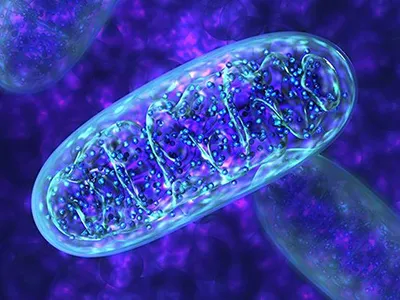
We all know that we feed our bodies quality nutrients to provide our cells with energy. But how, exactly, does a bite of food turn into the energy to make your heart beat, your muscles contract, or your brain think?
The answer lies deep within your cells in specialized units called organelles. One of these organelles is the mitochondrion.
Mitochondria are famously called the “powerhouses of the cell” or “cellular power plants” [1]. Their primary job is to produce the energy that every cell needs to function. Cells with high energy demands, like those in your muscles and liver, can contain hundreds or even thousands of mitochondria.
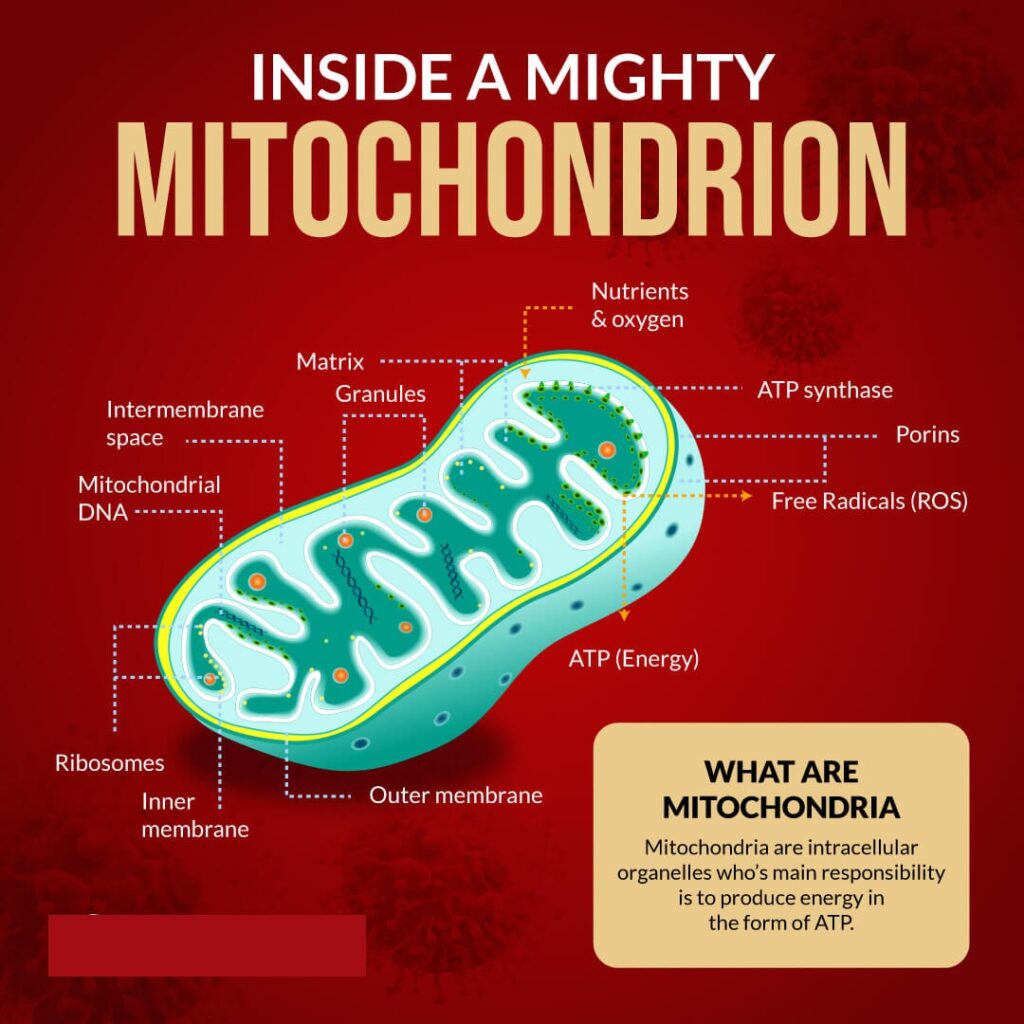
These tiny power plants are the biological engines that drive your vitality. Understanding and supporting your mitochondrial health is the foundation for energy, longevity, and overall well-being. This post explores the science of how your mitochondria work, what happens when they fail, and the key nutrients you need to keep them running at peak performance.
🔬 The Science: How Mitochondria Create Energy (ATP)
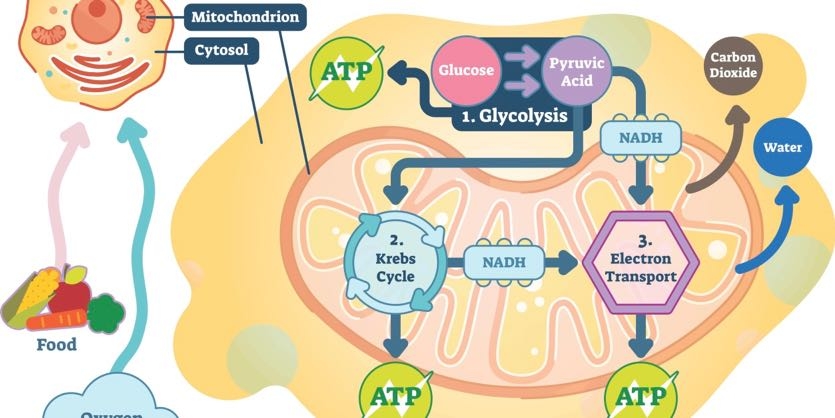
Mitochondria create energy by taking the carbon sources from carbohydrates, fats, and proteins in our diet and putting them through complex biochemical reactions. This process generates a special molecule called adenosine triphosphate, or ATP.
Think of ATP as the universal energy currency for your body. The process works in a constant cycle:
- Storage: The biochemical reactions in the mitochondria start with a molecule called adenosine diphosphate (ADP), which has two phosphate groups. Energy from food is used to add a third phosphate group, turning it into ATP.
- The Spring: This third phosphate bond is like a compressed spring, storing metabolic energy.
- Release: When your cell needs to perform a task—like contract a muscle or repair tissue—that third bond is broken. The “spring” is released, providing the power for that action. The molecule reverts to ADP, and the cycle begins again.
This constant ATP-ADP cycle is what powers everything you do, from digesting food and walking to keeping your heart pumping.
A key player in this entire process is Magnesium. Magnesium ions are vital for stabilizing ATP molecules, allowing them to transfer energy. Without sufficient levels of magnesium, your body’s energy production is severely impaired [4].
💡 The Insight: What is Mitochondrial Dysfunction?
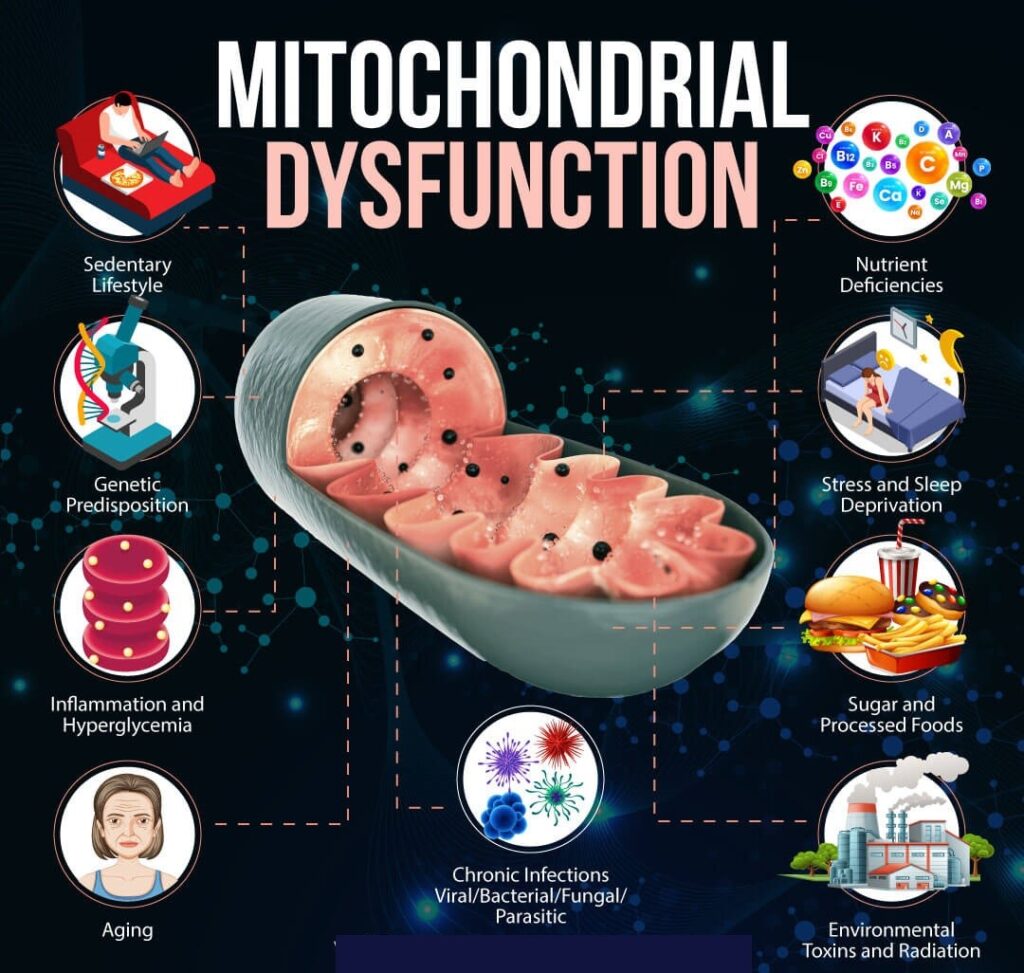
This energy-production system is efficient, but it’s also delicate. Healthy mitochondria do more than just make ATP; they are also involved in building other molecules (like components for DNA and RNA) and assist in processes like cell renewal and immunity.
Mitochondrial dysfunction occurs when this finely tuned system gets out of balance.
The primary culprits of this imbalance are modern lifestyle factors: illness, physical inactivity, sedentary lifestyles, and overeating. When our systems are disordered, the energy-generation process can go haywire and produce an excess of damaging molecules called Reactive Oxygen Species (ROS), also known as free radicals.
While some ROS are normal and act as signals for cellular repair, an excess of ROS wreaks havoc. This state of chronic oxidative stress, driven by poor mitochondrial health, is a root cause of many modern health issues. Over time, it can lead to the development of metabolic diseases like obesity, type 2 diabetes (T2DM), cardiovascular diseases, and neurodegenerative disorders [7, 10, 11].
🔬 The Science: The CoQ10 and Cellular Aging Connection
So, what protects the mitochondria from this ROS damage? One of the most important molecules in your body: Coenzyme Q10 (CoQ10).
CoQ10 is an essential antioxidant that your body synthesizes naturally. It is absolutely critical to mitochondrial health. In fact, 40-50% of your body’s CoQ10 is located in your mitochondrial membranes [7].
CoQ10 plays two fundamental roles:
- Energy Production: It acts as a cofactor in the energy-production pathway, meaning it’s a necessary “helper” molecule for the biochemical reactions that create ATP.
- Mitochondrial Protection: It is the most important antioxidant for the mitochondrial membranes. It neutralizes excess ROS, protecting the cellular power plants from the very damage they can create during energy generation.
Here is the critical insight: Your body’s natural production of CoQ10 reduces with age, starting as early as age 20.
Furthermore, some common medications—particularly statins prescribed to lower cholesterol—have the unintended consequence of reducing the body’s production of CoQ10 [13].
This combination of factors—lowered CoQ10 production from aging, depletion from medications, and general mitochondrial injury—all contribute directly to cellular aging [13].
🧬 The Solution: How to Support and Re-Energize Your Mitochondrial Health
The good news is that mitochondrial health is dynamic. We can support our mitochondria and improve our health outcomes. The strategy is two-fold: reduce the burden on your mitochondria and provide them with the specific nutrients they need to function.
1. Lifestyle is the Foundation
First, you must address the root causes of mitochondrial dysfunction. This includes:
- An Active Lifestyle: Exercise is a proven way to improve both the quantity and quality of your mitochondria [2].
- Proper Nutrition: A healthy diet, proper hydration, and avoiding chronic over-eating provide the right fuel without overwhelming the system.
- Rest and Recovery: Quality sleep and reducing stress are essential for allowing your cells to repair and renew.
2. Targeted Nutritional Support
Second, you can “feed your mitochondria” by filling the nutritional gaps with key compounds essential for energy and protection.
The Core Energy Nutrients (B-Vitamins & Magnesium)
- B-Vitamins: These are the “powerhouse compounds”. Several B-vitamins, notably riboflavin (B2), niacin, (B3), and pantothenic acid (B5), are directly involved in the production of ATP [16]. Vitamin B Co. contains these essential B-vitamins to support energy production.
- Magnesium: As mentioned, this mineral is essential for the ATP energy cycle. Magnesium Complex provides three highly bioavailable sources to keep your body and brain powered.
Antioxidant Protection (CoQ10, Vitamins E & C, Phytonutrients)
- CoQ10: Supplementation has been shown to improve markers of oxidative stress and inflammation [17, 18]. A landmark study in Swedish elderly persons found that supplementing with CoQ10 and selenium for four years improved quality of life and reduced cardiovascular mortality [12, 19]. NeoLife CoQ10 provides 100mg of this critical antioxidant, plus a proprietary blend of grape polyphenols (including resveratrol) and whole-grain lipids to enhance bioavailability.
- Vitamins E & C: These are powerful antioxidants that “quench” ROS. Vitamin E is considered one of the most important fat-soluble antioxidants for protecting the integrity of mitochondrial membranes [16].
- Phytonutrients: NeoLife’s PhytoDefence pack provides a diverse array of phytonutrients from the Carotenoid Complex, Flavonoid Complex, and Cruciferous Plus for powerful antioxidant protection that supports immune response and cell defense.
Cellular Structure (Omega-3s & Lipids)
Mitochondria and their membranes are physical structures that need to be built and maintained.
- Omega-3s: Long-chain omega-3 fatty acids are incorporated directly into the mitochondrial membranes, providing necessary fluidity [11]. Omega-3 Plus (the best omega-3 supplement) provides a full spectrum of eight omega-3s and is clinically proven to lower the inflammatory index. See comparison chart.
- Lipids & Sterols: Whole-grain phytolipids and phytosterols are also used to build cell membranes, helping them stay fluid and permeable so nutrients can get in [15]. Tre-En-En Grain Concentrates contain a proprietary blend of these concentrates to support cellular nutrition for energy and vitality. Cellular nutrition since 1958!-Get the science behind Tre-En-En® Grain Concentrates with Peer Reviewed Studies that support ingredients found in this amazing product.
These components are available in the all-in-one Pro Vitality pack, which provides four essential supplements to support overall health and vitality.
Your Energy is Cellular
Your mitochondria are fundamental to your energy, vitality, and well-being. Their quality is directly dependent on the energy you demand and the nutrient supply you provide.
While sedentary lifestyles, stress, and over-eating can impede mitochondrial vitality, you have the power to influence your cellular health. A healthy lifestyle and quality nutrition provide the essential foundation for optimal mitochondrial health, allowing you to pursue a lifetime of exceptional vitality.
The NeoLife Difference
Ready to experience science-backed cellular nutrition? Explore NeoLife’s clinically tested range—where every capsule delivers nature’s best, refined by science.
[Explore NeoLife’s Cellular Nutrition Products Here]
Your health journey doesn’t stop here. To learn more about how these systems work, explore our related articles below and discover the science-backed supplements mentioned in this post.
Further Reading
- The Quality Difference: Why “Clean, Clinically Proven” Supplements Win
- Introducing Omega-3 Plus – The Same Powerful Benefits, Now More Sustainable.
- The Dirty Truth About Cheap Supplements: What $20 Vitamins and Protein Powders Are Really Hiding.
- The Power of Vitamin C — Protecting Smokers and Those Exposed to Smoke.
References
- Gahl W. Mitochondria. National Human Genome Research Institute. Accessed Jan 5, 2022. https://www.genome.gov/genetics-glossary/Mitochondria
- Jacobs RA, Lundby C. Mitochondria express enhanced quality as well as quantity in association with aerobic fitness across recreationally active individuals up to elite athletes. J Appl Physiol 2013: 114(3), 344-50. https://doi.org/10.1152/jappiphysiol.01081.2012
- Géminard C. et al. Review: Reticulocyte maturation: mitoptosis and exosome release. BIOCELL 2002; 26(2): 205-215. https://doi.org/10.32604/biocell.2002.26.205
- Pichova I, et al. The involvement of Mg2+ in regulation of cellular and mitochondrial functions. Oxid Med Cell Longev 2017; 2017: 6797460. doi: 10.1155/2017/6797460
- Yin H, Zhu M. Free radical oxidation of cardiolipin: Chemical mechanisms, detection and implication in apoptosis, mitochondrial dysfunction and human diseases. Free Rad Res. 2012; 46(8): 959-74. https://doi.org/10.3109/10715762.2012.676642
- Mejia EM, Hatch GM. Mitochondrial phospholipids: Role in mitochondrial function. J Bioenerg Biomembr. 2016; 48(2), 99-112. https://doi.org/10.1007/s10863-015-9601-4
- Arenas-Jal M, et al. Coenzyme Q10 supplementation: Efficacy, safety, and formulation challenges. Compr Rev Food Sci Food Saf. 2020; 19(2), 574-94. https://doi.org/10.1111/1541-4337.12539
- Bhagavan HN, Chopra RK. Plasma coenzyme Q10 levels following supplementation with various coenzyme Q10 products. FASEB 2009; 23(S1). https://doi.org/10.1096/fasebj.23.1.supplement.729.13
- Schenker LC, Bakovic M. Formation and Regulation of Mitochondrial Membranes. Int J Cell Biol 2014; 2014: 1-13. https://doi.org/10.1155/2014/709828
- Suksomboon N, et al. Effects of coenzyme Q10 supplementation on metabolic profile in diabetes: A systematic review and meta-analysis. J Clin Pharm Ther. 2015; 40(4): 413-8. https://doi.org/10.1111/jcpt.12280
- Lepretti M, et al. Omega-3 Fatty Acids and Insulin Resistance: Focus on the Regulation of Mitochondria and Endoplasmic Reticulum Stress. Nutrients. 2018; 10(3): 350. https://doi.org/10.3390/nu10030350
- Johansson P, et al. Improved health-related quality of life, and more days out of hospital with supplementation with selenium and coenzyme Q10 combined. Results from a double-blind, placebo-controlled prospective study. J Nutr Health Aging. 2015; 19(9): 870-7. https://doi.org/10.1007/s12603-015-0509-9
- Aaseth J, et al. Coenzyme Q10 supplementation—In ageing and disease. Mech Ageing Dev. 2021; 197: 111521. https://doi.org/10.1016/j.mad.2021.111521
- Cooperstone JL, Schwartz SJ. Recent Insights into Health Benefits of Carotenoids. In: Carle R, Schweiggert R, eds. Handbook on Natural Pigments in Food and Beverages: Industrial Applications for Improving Food Color. 1st ed, Elsevier; 2016: 473-97. https://doi.org/10.1016/B978-0-08-100371-8.00020-8
- Dufourc EJ. Sterols and membrane dynamics. J Chem Biol 2008; 1(1-4): 63-77. https://doi.org/10.1007/s12154-008-0010-6
- Wesselink E, et al. Feeding mitochondria: Potential role of nutritional components to improve critical illness convalescence. Clin Nutr. 2019; 38(3): 982-95. https://doi.org/10.1016/j.clnu.2018.08.032
- Sangsefidi Z, et al. The effect of coenzyme Q10 supplementation on oxidative stress: A systematic review and meta-analysis of randomized controlled clinical trials. Food Sci Nutr. 2020; 8(4): 1766-76. https://doi.org/10.1002/fsn3.1492
- Fan L, et al. Effects of coenzyme Q10 supplementation on inflammatory markers: A systematic review and meta-analysis of randomized controlled trials. Pharmacol Res. 2017; 119: 128-36. https://doi.org/10.1016/j.phrs.2017.01.032
- Alehagen U, et al. Still reduced cardiovascular mortality 12 years after supplementation with selenium and coenzyme Q10 for four years: A validation of previous 10-year follow-up results of a prospective randomized double-blind placebo-controlled trial in elderly. PLOS ONE. 2018; 13(4): e0193120. https://doi.org/10.1371/journal.pone.0193120
Pingback: What is Cellular Nutrition? A Guide to Your Cell Membrane & Energy
Pingback: Omega-3 and Carotenoids for Eye Health: The Science of Vision Protection.