
🌊 The Ocean: Source of Life — and Omega-3s
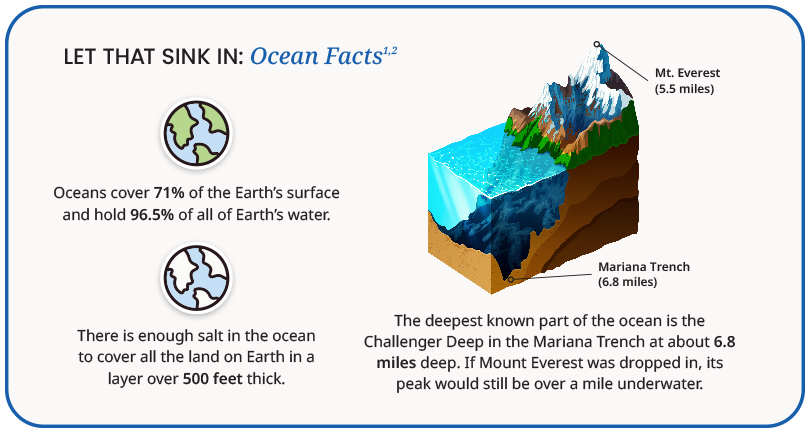
The Earth’s oceans are a vast and precious resource, home to extraordinary biodiversity — from plankton and crustaceans to the fish that provide the Omega-3 fatty acids essential for human health. Oceans cover more than 70% of our planet and produce roughly half of the oxygen we breathe, supporting both marine life and billions of people who rely on them for food and livelihood.
But our oceans face mounting threats — from climate change, overfishing, habitat destruction, and pollution — all of which endanger the delicate ecosystems that make these waters such a vital source of nutrition. Protecting marine resources ensures that future generations can continue to benefit from the life-supporting nutrients, including Omega-3s, that the sea provides.
⚓ Net Loss: Destructive Fishing Practices
Fishing has sustained humanity for more than 140,000 years, but as global demand for seafood has soared, industrial-scale fishing has introduced practices that harm marine ecosystems.
- Trawling: Dragging massive nets along the ocean floor to catch fish like flounder and shrimp — often capturing unintended species like turtles, dolphins, and whales, while destroying coral habitats.
- Fish Farming (Aquaculture): While reducing pressure on wild fish, overcrowded farms can spread disease and antibiotics into the oceans, causing pollution and algal blooms.
- Driftnets (Gillnets): Sometimes called “invisible curtains of death,” these nets capture everything in their path and generate immense “bycatch” — dead, discarded marine life.
Such methods threaten both ocean balance and the sustainability of the fish we depend on for Omega-3 fatty acids.

🐟 Overfishing and Its Global Impact
Modern refrigeration and transport allow people everywhere to enjoy seafood, but this demand has outpaced natural replenishment. According to the Food and Agriculture Organization (FAO), over 35% of global fishery stocks are now overfished, compared to just 10% in 1974.
Bycatch alone wastes more than 9 million tons of marine life every year, disrupting entire food chains and threatening future fish populations.
Illegal fishing further complicates sustainability — with an estimated 11–26 million tons of seafood caught unlawfully each year, worth up to $23 billion USD. Without stricter global enforcement and consumer awareness, overfishing could jeopardize both marine biodiversity and global nutrition.
🧭 Fishy Business: Fraud in the Seafood Supply Chain
A global review of 9,000 seafood samples from 44 studies found that over 36% of seafood products are mislabeled — often replacing expensive species like tuna or snapper with cheaper, less healthy substitutes.
This not only deceives consumers but can pose health risks. For instance, escolar, often sold as tuna, contains indigestible wax esters that cause digestive distress.
Such widespread mislabeling underscores why traceability and transparency are critical — especially when sourcing fish oil supplements derived from marine sources.
Choosing Sustainable Seafood and Fish Oils
Consumers wield immense power through their purchasing choices. Supporting sustainable fisheries and certified brands helps protect marine ecosystems.
Look for trusted certifications like:
- Marine Stewardship Council (MSC)
- Friend of the Sea
- Ocean Wise
- FishWise
These programs audit fisheries and trace supply chains to ensure environmental responsibility and label accuracy.
When it comes to fish oil supplements, these same certifications apply — helping you choose Omega-3 products that are both eco-conscious and contaminant-free.

💧 The Importance of Omega-3 Fatty Acids
Omega-3 fatty acids — especially EPA and DHA — are essential for heart, brain, and joint health, supporting everything from cognitive function to balanced inflammation and cardiovascular protection.
The American Heart Association recommends eating at least two servings of fatty fish per week. Yet most people fall short — and even when they don’t, fish contamination (mercury, PCBs, pesticides) can be a concern.
That’s where high-quality, purified fish oil supplements come in — providing consistent, clean Omega-3s without the risks of contaminated seafood.
Omega-3 Plus: Sustainability Meets Science
Omega-3 Plus embodies a commitment to both health and sustainability.
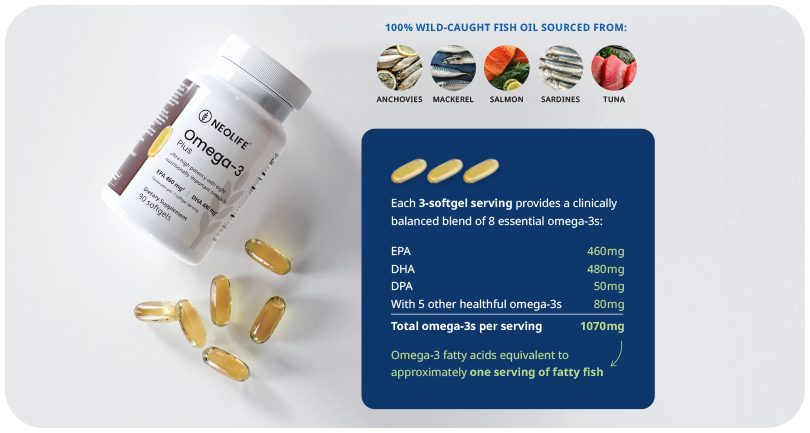
Each batch is made with 100% wild-caught, sustainably sourced fish oil from anchovies, sardines, salmon, tuna, and mackerel — all verified by independent certification bodies.
Key Features:
- Provides 1,070 mg of eight standardized Omega-3s, including EPA, DHA, and DPA.
- Screened for 200+ contaminants, meeting or exceeding global purity standards.
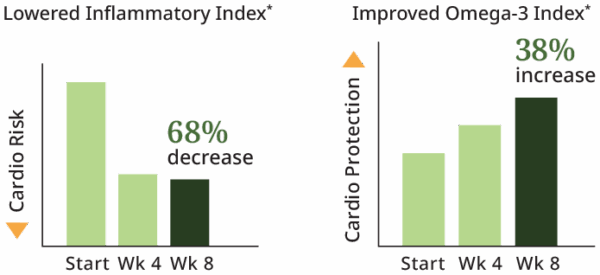
- Clinically proven to improve Omega-3 index by 38%, reduce triglycerides by 17%, and balance inflammation by 68% in 8 weeks*.
- Manufactured in pharmaceutical-grade facilities with molecular differentiation for superior purity and bioavailability.
Choosing Omega-3 Plus means choosing an ocean-friendly product backed by rigorous scientific validation and a transparent supply chain.
The omega-3 profile in Omega-3 Plus has been clinically studied in humans and shown to be bioavailable, readily absorbed and assimilated into cell membranes within just 4 weeks.*12 It is cardio-protective and shown to reduce triglycerides by 17% and improve the omega-3 index by 38% in 8 weeks.* Furthermore, the study revealed that the omega-3 profile helped balance normal inflammation and lowered the inflammatory index by 68%.*
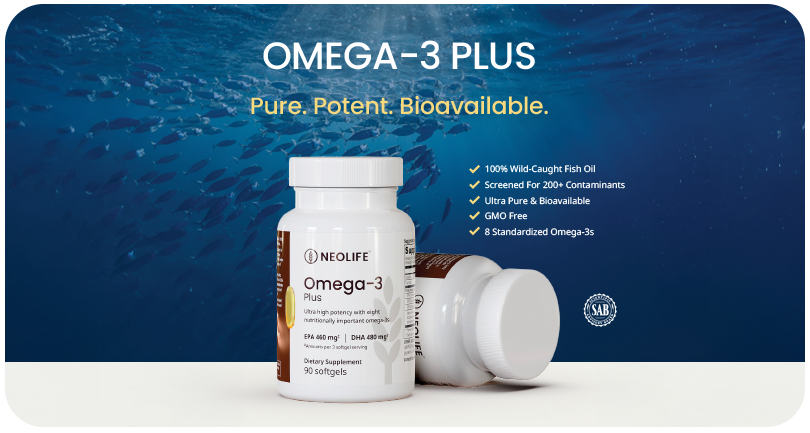
Omega-3 Plus is an effective, pure fish oil that is sustainably sourced so you can feel good about what you are putting into your body and rest assured knowing it is an ocean-friendly product.
Seafood is delicious and often healthy, but choosing what fish to eat or which fish oil to supplement with can be a fraught decision with big impacts on your health and the planet. Luckily there are tools like guides and certifications that can help guide conscientious decision making.
Oceans are a vast, valuable resource and it is up to everyone to be responsible stewards of the Earth so future generations can continue to enjoy the broad biodiversity and beautiful aquatic environments that remain today.
References
- U.S. Geological Survey. Top 10 Things You Didn’t Know About the Ocean. June 24, 2022.
- Rafferty, J.P. & Riley, P. How Deep Is the Ocean? Encyclopedia Britannica, Apr 10 2024.
- British Library. Fishing From the Earliest Times. June 16 2015.
- Turtle Island Restoration Network. Destructive Fishing Methods. 2025.
- Naylor, R.L., et al. Blue Food Demand Across Geographic and Temporal Scales. Nature Comms 12 (2021): 5413.
- Gilman, E., et al. Benchmarking Global Fisheries Discards. Scientific Reports 10 (2020): 14017.
- FAO. The State of World Fisheries and Aquaculture 2022. Rome 2022.
- Agnew, D.J., et al. Estimating the Worldwide Extent of Illegal Fishing. PLOS ONE 4 (2009): e4570.
- Leahy, S. Seafood Fraud Happening on a Vast Global Scale. The Guardian, Mar 15 2021.
- Monterey Bay Aquarium Seafood Watch. National Seafood Guide. Updated Mar 14 2025.
- American Heart Association. Fish and Omega-3 Fatty Acids. Aug 23 2024.
- Carughi, A. & Perelman, D. Effect of Omega-3 Fatty Acid Supplementation on RBC Membrane Composition. FASEB J 22 (2008): 1094.2.

Pingback: Introducing NeoLife Omega-3 Plus – Sustainable Fish Oil with the Same Proven Benefits
Pingback: Supplement Quality Difference: Clean, Clinically Proven & Pharmaceutical-Grade